Which body areas are easier for laser tattoo removal?
Not every tattoo responds to the laser in the same way. Here is why some areas of the body clear more easily than others, and what that means for your sessions.

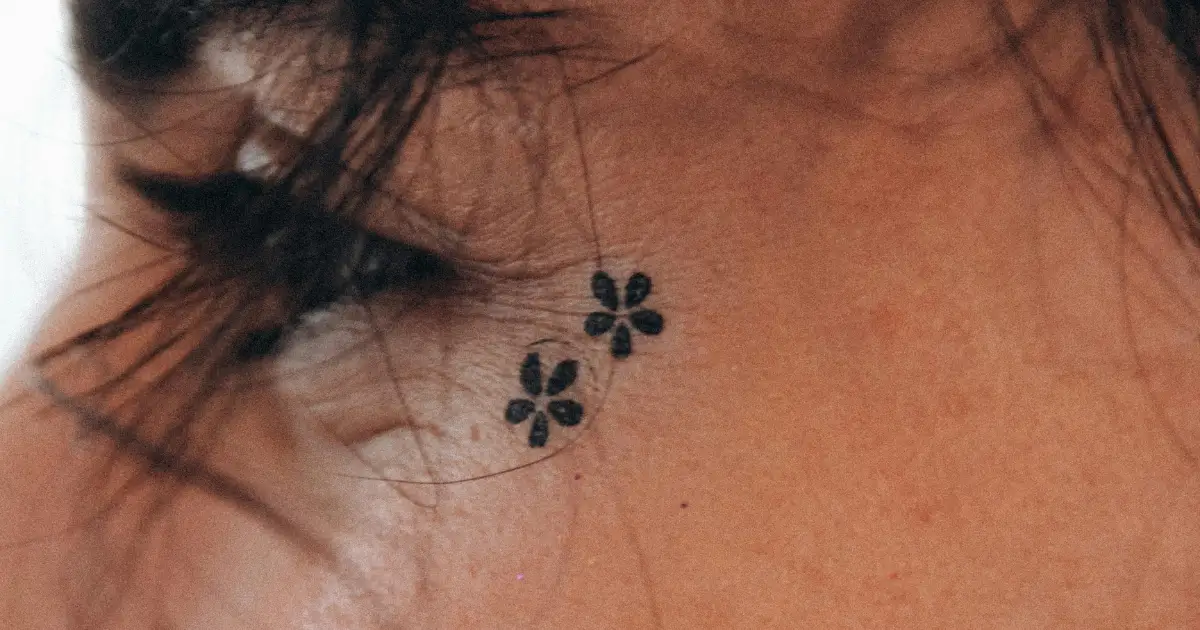
Laser tattoo removal relies on a precise biological mechanism: the laser fragments the pigment, then the body gradually eliminates it. Yet with an identical tattoo, two different areas of the body can progress in very contrasting ways.
Many customers ask the same question: are some areas of the body easier to treat than others?
The answer is yes. The location of the tattoo directly influences:
- how quickly the pigment is eliminated,
- the number of sessions needed,
- how well the skin tolerates the treatment,
- the quality of recovery.
At Ray studios, a centre dedicated exclusively to laser tattoo removal, the anatomical area is factored into the estimate of your treatment journey from the initial consultation onwards.
1. Why the area of the body influences removal
Laser tattoo removal works in two stages:
- the laser fragments the ink particles,
- the immune system gradually eliminates those fragments.
The capacity to eliminate pigment depends heavily on physiological factors:
- local blood supply,
- lymphatic drainage,
- skin thickness,
- how mobile the area is,
- exposure to friction.
These parameters vary from one region of the body to another, which explains the differences in how quickly an area responds to treatment.
2. Areas that are generally easier to treat
As a general rule, areas close to the trunk with a good blood supply respond more quickly.
Upper back and shoulders
These areas offer:
- a good blood supply,
- relatively uniform skin,
- stable skin recovery.
Tattoos in these locations often show a more consistent progression.
The chest
The chest benefits from an efficient blood supply and is subject to little mechanical strain. Results here are generally consistent. Individual results vary.
The upper arms
Areas such as the biceps or triceps often respond better than the extremities. Circulation there is more favourable to pigment elimination.
3. Areas that respond more slowly
Some regions need more time and more sessions.
Ankles and feet
These areas have:
- slower peripheral circulation,
- thinner skin,
- exposure to friction.
Pigment elimination here is more gradual.
Hands and fingers
These areas combine:
- reduced blood supply,
- a high degree of movement,
- constant exposure.
Removal remains possible, but it often calls for more patience.
The lower legs
Calves and shins can respond more slowly than areas on the upper body.
4. Skin thickness and sensitivity
The structure of the skin influences how the laser is set:
- thicker skin can tolerate higher settings,
- thin skin calls for a more gradual approach.
Assessing your phototype and skin texture is part of the evaluation carried out by your skin therapist beforehand.
5. The role of the technology
This technology allows:
- finer fragmentation of the pigment,
- a high level of precision,
- limited thermal impact.
It makes it possible to adapt the treatment to each area, but it does not change the biological characteristics specific to each region of the body.
6. The role of RTP® in projecting your treatment
At your initial consultation, an RTP® is drawn up: a personalised statistical projection of the number of sessions needed.
This projection takes into account:
- the location of the tattoo,
- the depth of the pigment,
- ink density,
- the colours,
- your skin type.
Anatomical location is a major criterion in that projection.
7. RsAP®: adapting the treatment to each area
The RsAP® (Ray studios Advanced Performance) treatment protocol is based on:
- a precise anatomical analysis,
- settings adapted to each area,
- optimised spacing between sessions,
- structured follow-up.
Each area of the body is given its own strategy.
8. Can removal be sped up depending on the area?
There is no method that significantly speeds up the biological process.
Certain habits do, however, help you get the most from your treatment:
- respect the intervals between sessions,
- avoid sun exposure,
- follow the aftercare advice,
- maintain a healthy lifestyle.
Consistency and patience remain essential.
9. Can every area be treated?
The vast majority of skin areas can be treated when the work is carried out by trained skin therapists, with correct laser settings and in a controlled environment.
Some specific areas, such as the gums, are not treated because of the high risk of complications (burns, poor healing, gum recession).
An initial consultation allows your skin therapist to assess whether treatment is feasible.
Key points
Yes, some areas of the body are easier to treat than others.
- Areas close to the trunk generally respond more quickly.
- The extremities may need more sessions.
- Location directly influences how quickly a tattoo fades.
At Ray studios, anatomical analysis, picosecond technology, the RsAP® protocol and your RTP® make it possible to adapt the treatment precisely to each area. Individual results vary.
FAQ
Does an ankle tattoo always take longer to fade?
Peripheral areas such as the ankles often have slower blood circulation, which can slow down the elimination of pigment particles after they are fragmented by the laser. However, this does not mean the treatment is ineffective. It may simply require a higher number of sessions. A personalised assessment helps estimate the likely duration of the treatment according to your specific situation, under the guidance of experienced skin therapists.
Do tattoos on the upper body fade faster with tattoo removal?
On average, yes. Areas such as the shoulders, back, or chest generally benefit from better blood circulation, which helps the body progressively eliminate fragmented pigments more efficiently. However, other factors remain essential in determining how quickly a tattoo responds to treatment, including ink density, pigment depth, and the colours used. Treatment outcomes are always influenced by a combination of factors assessed by experienced skin therapists.
Are hands and fingers more difficult to treat?
These areas often respond more slowly because of their peripheral location and constant exposure to friction. The mobility of the area can also influence the healing process. Tattoo removal is still entirely possible, but it generally requires more sessions and a gradual approach to ensure safe and effective results, under the care of experienced skin therapists.
Can all areas of the body be treated with tattoo removal?
Most skin areas can be treated when the procedure is performed within an appropriate medical framework. However, certain specific areas, such as the gums, are generally not treated due to the high risk of complications. A prior consultation is essential to assess feasibility and adapt the treatment protocol safely, under the guidance of experienced skin therapists.