Black Skin and Tattoos: Expert Knowledge for Removal
Black skin calls for specific expertise in tattoo removal to help limit hyperpigmentation or marking. See how Ray studios adapts each session to your skin. Individual results vary.

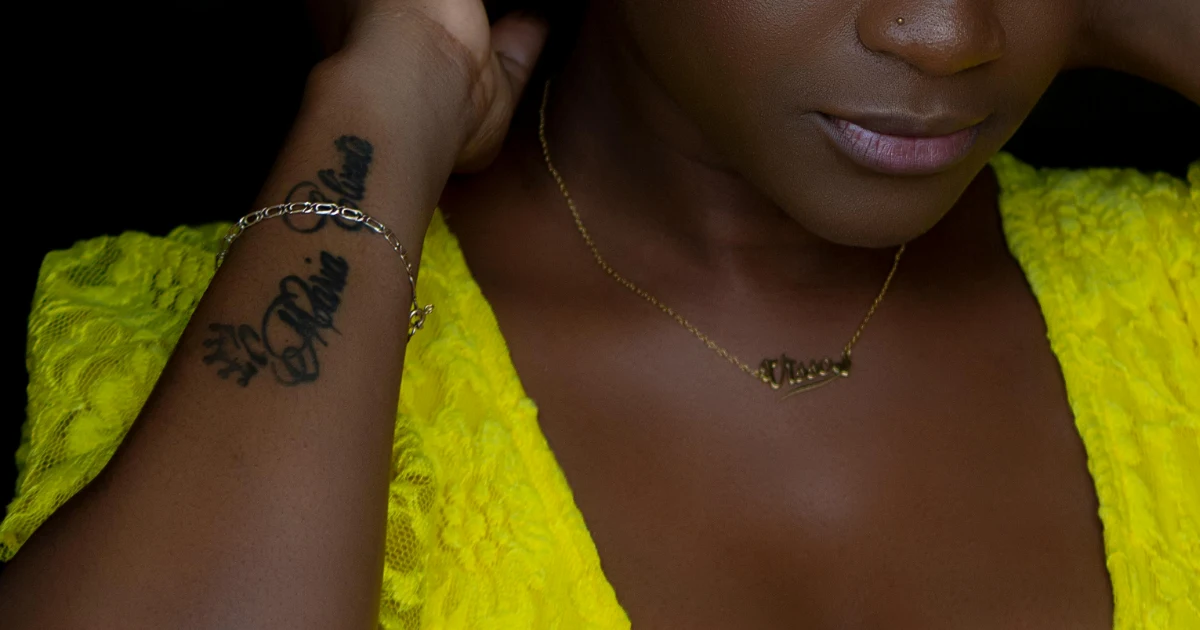
Long overlooked in the practices and conversations around tattooing, black skin calls for a specific understanding, both in the art of tattooing and in that of removing a tattoo. At Ray studios, our work as tattoo removal specialists rests above all on a close reading of the ink, the style and the skin tone. On black skin, every parameter takes on an added dimension.
Why does this matter so much? Because a laser session is never neutral. And because a poor assessment can affect the skin, cause marking or lead to an uneven result. Understanding tattooing is the basis of successful tattoo removal, and this rule is even truer for darker skin.
Inks and black skin: a particular dialogue the laser has to understand
Darker skin is naturally rich in melanin, a pigment that influences how visible inks are, and also how they react to the laser. The key points:
- Black and grey pigments, very common in the styles suited to black skin (blackwork, tribal, dotwork), are well absorbed by picosecond lasers.
- Light colours (white, yellow, pastel), already hard to see on darker skin, are also the most difficult to break up with the laser. Some react poorly, or even change colour (white to beige or yellow).
- The density of the tattoo (solid fill versus fine line) also changes things: the more concentrated the pigment, the more sessions are needed, but the more visible it is to the laser.
At Ray studios, we study each tattoo like a map: ink type, depth, age, any layering. This initial reading shapes the quality of the removal and the preservation of your skin tone.
Poor tattoo work or an unsuitable design: the corrective removal question
Many people with darker skin come to us with the same observation: their tattoo does not live up to their expectations. This is often the result of clumsy or unsuitable work:
- Poorly chosen inks, hard to see or oxidised;
- Lines that are too fine and have blurred over time;
- Insufficient contrast against the skin tone, making the design hard to read.
These cases give us a double responsibility:
- Removing carefully what has not worked,
- Preserving or repairing the integrity of the skin for a possible future tattoo (cover-up).
At Ray studios we have developed tattoo removal protocols, including:
- Preliminary laser tests on small areas,
- Short cycles plus long rest periods,
- Dermocosmetic aftercare specific to each phototype.
Knowing tattoo styles on black skin, in order to remove them well
Some styles, very popular on darker skin, call for particular know-how in removal:
- Blackwork: very dense coverage, so more sessions. But its black pigments are the simplest to treat.
- Dotwork: dotted designs carry little ink, so they fade more easily. But their low contrast sometimes makes them hard to see under the laser light.
- Ornamental and graphic: often well placed and easy to read, these tattoos come away cleanly if the inks are of good quality.
- Spiritual, cultural or religious tattoos: their strong symbolism calls for respectful support. Removal must be done in keeping with the customer's history and choices.
Our skin therapists take the time to document each project, to understand the reasons behind the wish to remove a tattoo, and to build a lasting relationship of trust.
Tattoo removal on black skin: heightened care and attention
Skin rich in melanin sometimes reacts more strongly to any stress, and the laser, even at well judged settings, remains a significant stimulus. Our specific precautions include:
Before the sessions:
- An in-depth initial consultation with a reaction test,
- Identifying at-risk areas (old scars, moles, uneven pigmentation),
- Preparing the skin (hydration, sun protection for 2 weeks beforehand).
During:
- Setting the lasers to compatible wavelengths,
- Splitting the treated areas into sections (to avoid excessive heating),
- Immediate cooling to limit inflammation.
After:
- Soothing post-laser cream,
- Strict sun avoidance,
- Follow-up with your skin therapist on request, checking how the skin is healing.
Our priority is to preserve the natural tone of your skin, without lightening or marking it. Individual results vary.
In summary
Tattoo removal on black skin is not a routine job: it is work built on expertise, patience and care. It calls for a close understanding of the pigments used, a reading of the tattoo styles most common on darker skin, and close attention to how the skin reacts.
At Ray studios, we do more than pass a laser over your skin: we support every customer through a complete project, one that is aesthetic, personal and respectful of their identity. Whether you want full removal or a future cover-up, we adapt our protocol to your skin, your history and your expectations. It all starts with an initial consultation, and our Full Remove plan gives you unlimited sessions at a single fixed price.
FAQ
Can a tattoo be removed from black skin without leaving marks?
Yes, but this relies on great technical precision. Black skin is more prone to pigmentation changes after laser treatment. By taking a gentle, gradual approach and allowing the skin time to recover between sessions, it is possible to achieve clear removal without altering the skin tone. This requires rigour, expertise and personalised follow up.
Do all inks disappear in the same way?
No, and this is a crucial point. Black and dark inks break down better, as they absorb laser energy well. However, light inks such as white, yellow or turquoise contain refractory or metallic pigments that can change colour or oxidise under the effect of the laser. On black skin, it is therefore essential to properly identify these inks before starting treatment.
Is tattoo removal more painful on black skin?
Pain is not directly linked to skin colour, but to the contrast between the ink and melanin, the area being treated, and the depth of the pigment. On darker skin tones, we use more gradual settings to reduce the burning sensation. We also offer numbing creams and a skin cooling system to improve comfort during the session.
What should I do if my tattoo is poorly done or barely visible on my skin?
Sometimes tattoos do not stand out well on dark skin, due to a lack of contrast or a poor stylistic choice. In this case, two solutions are possible: partial or full removal. Our team can guide you through either option, depending on the condition of your skin and your future plans.
How many sessions are needed for a full tattoo removal on dark skin?
The average ranges between 6 to 12 sessions, spaced 6 to 8 weeks apart. For dark skin, we favour longer protocols with longer regeneration breaks, in order to avoid the risk of hyperpigmentation or scarring. Each case is unique: we adjust the length of the protocol according to your skin's reaction and your goals.