The Best Tattoo Removal Technology in 2025: The Laser
Looking for the best way to remove a tattoo in 2025? Find out why the picosecond laser remains the reference technology at Ray studios. Individual results vary.

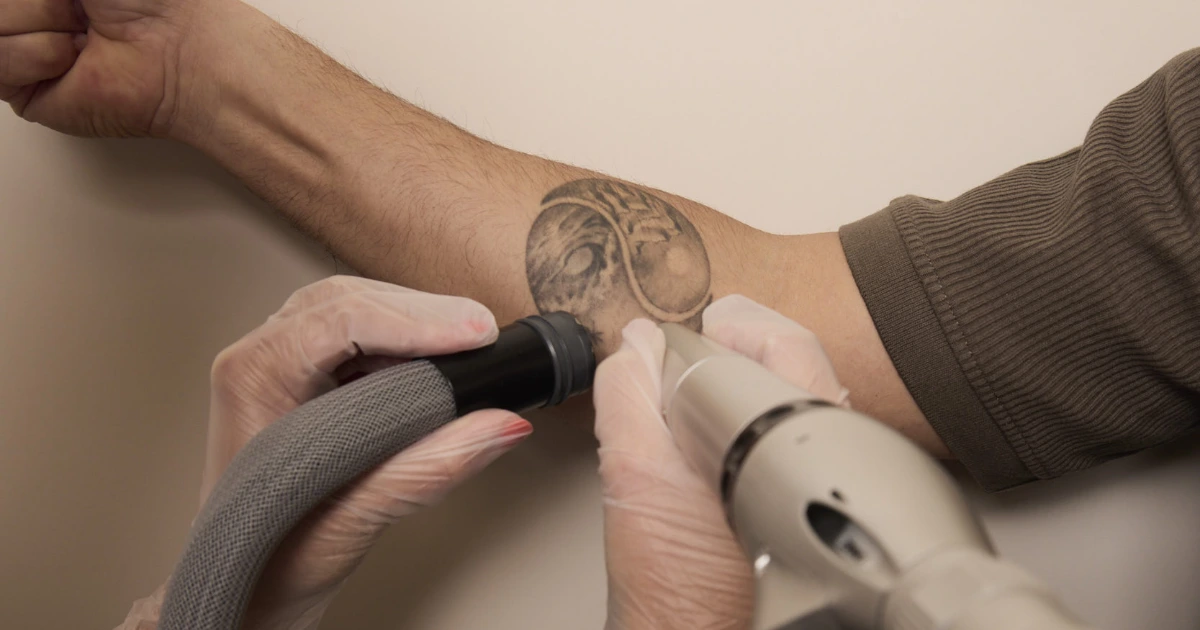
Tattoo removal has come a long way in recent years. In 2025, it is now possible to remove a tattoo faster, more precisely and more safely than before, thanks to advances in technology.
Of all the methods available, only one stands out as the reference: the picosecond laser. Here is why this technology is considered the best tattoo removal solution today.
Why the laser remains the reference in 2025
The laser is currently the only genuinely effective method for removing a tattoo without damaging the skin. Unlike abrasive methods (creams, peels, dermabrasion) or chemical treatments, the laser targets the ink pigments only, without affecting the surrounding tissue.
In 2025, new generation lasers deliver results well beyond those of older technologies, with:
- Fewer sessions
- Less discomfort
- Less risk of scarring
- And above all, cleaner, longer lasting results
Picosecond vs nanosecond: what is the difference?
There are two main families of tattoo removal lasers: the nanosecond laser (older) and the picosecond laser, used in the most advanced centres such as Ray studios.
The nanosecond laser (previous technology)
It breaks up the ink with pulses in the nanosecond range. Although it was the standard for a long time, it now has several limitations:
- Less effective on certain colours (light blue, green, yellow)
- More side effects (prolonged redness, scabbing, scarring)
- A higher number of sessions
The picosecond laser (2025 technology)
The picosecond laser delivers its pulses 1000 times faster, which allows:
- A finer break-up of the pigments
- A faster and more complete clearance
- A better tolerance by the skin
- Effectiveness on all colours, even the most stubborn ones
At Ray studios, we use only latest generation picosecond lasers, which allows an optimised approach whatever the tattoo. Individual results vary.
Why choose Ray studios for tattoo removal in 2025?
Ray studios offers a premium tattoo removal experience, combining advanced technology, personalised follow-up with your skin therapist and visible results from the first sessions. Individual results vary.
Here is what makes the difference:
- Use of latest generation picosecond lasers
- An initial consultation to adapt the settings to your skin and your tattoo
- Full respect for safety and comfort in a controlled environment
- Treatments carried out only by trained skin therapists
- Visible results, even on complex tattoos
On top of that, each session is optimised to work faster and reduce the total number of appointments. With the Full Remove plan, you get unlimited sessions at a single fixed price.
Where is tattoo removal heading next?
In 2025, laser technology has reached an exceptional level of precision and reliability. Future advances could involve:
- Real-time skin analysis systems
- Treatment tracking apps for the customer
- Combined treatments to improve skin regeneration
- Apps to follow the treatment over time
For now, though, the picosecond laser remains without question the best solution for removing a tattoo effectively and safely.
FAQ
Is the picosecond laser really more effective than other types of laser?
Yes, without question. In 2025, clinical studies and professional feedback confirm that the picosecond laser is faster, more precise and better tolerated than older nanosecond lasers. It delivers ultra-short pulses that break the ink into finer particles, making it easier for the lymphatic system to eliminate them. This technology is also gentler on the skin, which significantly reduces the risk of side effects, particularly on sensitive areas or darker skin tones. At Ray studios, we only use the latest generation of picosecond lasers.
Is picosecond laser tattoo removal painful?
The sensation is generally well tolerated, even without local anesthesia. It is often compared to quick snaps of a rubber band against the skin, along with a brief feeling of heat. At Ray studios, a skin cooling device is used during the session to reduce immediate discomfort. The treatment is short—ranging from a few seconds to a few minutes depending on the size of the area. For more sensitive patients, a medical numbing cream can be prescribed during the initial consultation.
Can all tattoo colours be treated with the picosecond laser?
Yes. The picosecond laser is currently the most effective technology for complex inks, such as green, light blue, turquoise or yellow — colours that have historically been difficult to remove. Thanks to its very short pulses and the ability to adjust different wavelengths, it allows for optimised multi-tone tattoo removal. At Ray studios, each tattoo is analysed according to its pigment palette and treated with specific settings to ensure a consistent and gradual reduction of all tones.
Can a tattoo on the face or eyebrows be removed?
Yes, but this requires specific expertise. Areas such as the eyebrows, temples or jawline are more sensitive and more exposed, which calls for extremely precise laser settings. At Ray studios, treatments on the face are exclusively carried out or supervised by experienced skin therapists, who adjust the intensity, frequency and pace of sessions to preserve the integrity of the skin and hair. This approach allows even permanent makeup to be treated with care and precision. Individual results vary.
Does laser treatment leave traces, scars or visible marks?
No, provided the treatment is carried out in a professional treatment setting, with settings tailored to your skin type and the pigment being treated. The picosecond laser works without prolonged thermal burning, which preserves the quality of the dermis. At Ray studios, every session includes a rigorous aftercare protocol, including healing cream, sun protection and professional follow-up. Cases of scarring are extremely rare and most often relate to tattoo removal carried out outside a professional setting. Our goal remains the same: clear, smooth and even skin. Individual results vary.