Which laser model is most effective for tattoo removal in 2026?
Which laser is most effective in 2026? A look at picosecond technology and the PicoWay from Candela, and why the protocol matters as much as the machine.

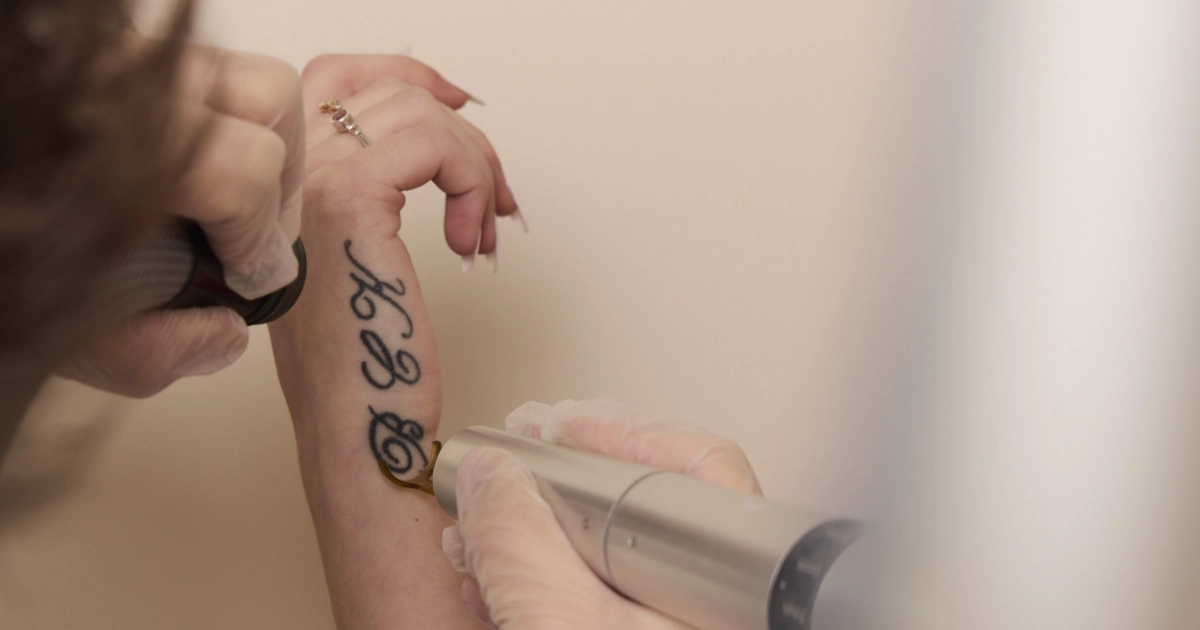
In 2026, the best performing laser model for tattoo removal is the PicoWay picosecond laser from Candela, thanks in particular to its combination of wavelengths, its photoacoustic technology and its strong safety profile.
Picosecond lasers are now seen as a major step forward compared with older nanosecond Q-switched lasers, because they break pigment down more finely while limiting the thermal effect on the skin. Delivering energy over an extremely short time makes it possible to target pigment more precisely while preserving the surrounding tissue. Published data and practical experience confirm that lasers remain the most reliable and effective approach to tattoo removal, and that picosecond technologies have improved both the effectiveness and the safety of treatments. Individual results vary.
Why the picosecond laser is the benchmark in 2026
Laser tattoo removal works on a precise principle: breaking ink pigment into particles small enough for the body to clear gradually through the immune system.
Older nanosecond technologies worked mainly through a thermal effect. They heated the pigment to make it fragment, but that heat could also spread into the surrounding tissue. This increased the risk of redness, blistering, burns, scarring or pigment changes, and sometimes limited how finely the pigment could be broken down.
The picosecond laser works differently. It delivers its energy in extremely short pulses, on the order of a thousandth of a billionth of a second. This speed allows an almost instantaneous energy delivery, generating a mechanical shockwave that fragments the pigment without excessive heating of the tissue. This photoacoustic effect explains why picosecond lasers allow finer fragmentation, better pigment clearance and better skin tolerance.
Why the PicoWay from Candela stands out
Among the picosecond lasers available in 2026, several models are well known: PicoSure, PicoSure Pro, Discovery Pico, Enlighten, PicoPlus and PicoWay.
The PicoWay from Candela stands out in particular for tattoo removal, because it combines several important advantages: advanced picosecond technology, a very short pulse duration and, above all, several wavelengths that make it possible to treat a wide spectrum of colours.
Candela presents the PicoWay as a laser designed to treat a wide variety of pigments, with wavelengths including 1064 nm, 532 nm, 730 nm and 785 nm depending on the configuration. This range matters, because each pigment has different absorption properties.
A tattoo may contain:
- deep black pigments
- red or orange inks
- more complex blue or green shades
An effective laser therefore needs to adapt its action to the colour of the ink, its depth, its density and the customer's skin type. It is this ability to adapt that makes the difference in practice.
PicoWay vs PicoSure: what is the difference?
The PicoSure from Cynosure remains a well regarded laser, historically for certain colours such as blue and green thanks to its 755 nm wavelength. That wavelength has a good affinity for some specific pigments.
The PicoWay, however, offers a more versatile approach to complete tattoo removal. Its 1064 nm wavelength is particularly effective on black pigment and penetrates more deeply into the skin, while being better suited to higher skin types. The complementary wavelengths (532 nm, 730 nm, 785 nm) target red, orange, blue and green pigments more effectively.
This combination allows a more complete and more consistent approach to multicoloured or complex tattoos.
At Ray studios, the choice of the PicoWay from Candela rests on exactly this logic: using a laser able to handle the widest possible range of situations, with better control of the settings and a safer profile for the skin.
The best laser also depends on the tattoo
Saying that the PicoWay is the most effective model does not mean that every tattoo responds in the same way. The outcome always depends on several factors:
- the chemical nature of the pigments
- their density and saturation
- how deeply they were implanted
- the age of the tattoo
- the area of the body
- the customer's skin type
- the individual immune response
An old black tattoo on the forearm may respond quickly, while a dense multicoloured tattoo containing complex pigments such as yellow or white will call for more caution and often more sessions.
Some colours remain harder to clear, even with the best technologies. That is a useful reminder: the laser is a powerful tool, but it does not replace the body's own biology.
Why the protocol matters as much as the machine
A high performing laser used badly can give disappointing results. A rigorous protocol, on the other hand, makes it possible to use the technology to its full potential.
At Ray studios, the PicoWay from Candela is used within a structured approach built on two pillars: the Ray Tattoo Profile (RTP®) and the RsAP® protocol.
The RTP® is a projection of the number of sessions needed, based on the characteristics of the tattoo: size, colours, density, depth, location and skin type. It sets out a coherent strategy from the start and gives the customer a realistic view of the treatment.
The RsAP® protocol then allows the treatment to be adapted session after session. The skin therapists adjust the laser settings according to how the skin reacts, how the pigment is changing and how the skin is healing. This gradual adaptation is essential to achieving effective removal while avoiding overtreatment and preserving skin quality.
Conclusion
In 2026, the most effective laser for tattoo removal is the PicoWay picosecond laser from Candela. Its photoacoustic technology, its ultra-short pulses and its multiple wavelengths make it a benchmark for treating a wide variety of tattoos with precision.
But the best result does not depend on the laser model alone. It also depends on the initial assessment, the settings used, the pace of the sessions and the follow-up provided by your skin therapist.
At Ray studios, the PicoWay from Candela is used within a complete protocol, with the Ray Tattoo Profile (RTP®) and the RsAP® protocol, in order to optimise each treatment in a personalised way, balancing effectiveness, safety and the quality of the result. Individual results vary. Everything starts with an initial consultation, and treatment is covered by the Full Remove plan: unlimited sessions at a single fixed price.
FAQ
What is the best laser for tattoo removal in 2026?
The PicoWay picosecond laser by Candela is currently one of the most advanced options for tattoo removal. It combines multiple wavelengths, precise photoacoustic action, and excellent skin tolerance. This versatility allows it to treat a wide range of colours, including more challenging shades like blue and green. It is also particularly suitable for darker skin tones thanks to the 1064 nm wavelength. However, its effectiveness also depends on the treatment protocol and the expertise of qualified professionals or skin therapists.
Why is PicoWay more effective than older lasers?
PicoWay uses picosecond pulses, which are much shorter than those of traditional nanosecond lasers. This ultra-short duration allows for finer fragmentation of pigments, with less heat diffusion into the skin. In practice, this improves treatment effectiveness while reducing the risk of side effects. Older technologies can still be effective in certain cases, particularly on black inks, but they are generally less precise. PicoWay therefore represents a significant advancement in both performance and safety.
PicoWay or PicoSure: which one to choose?
PicoSure is a well-established technology, particularly effective for certain blue and green inks. However, PicoWay offers greater versatility for overall tattoo removal, thanks to its multiple wavelengths such as 1064 nm, 532 nm, 730 nm, and 785 nm. This range allows the treatment to be adapted to a wider variety of colours and skin types. The right choice always depends on the tattoo itself, but PicoWay is especially comprehensive for a professional, tailored approach to tattoo removal, when performed by qualified professionals or skin therapists.
Can the best laser remove a tattoo in a single session?
No. Even the best laser cannot remove a tattoo in a single session. The laser breaks down the pigments, but their elimination depends on the body’s immune system, which works gradually between sessions. PicoWay may reduce the total number of sessions in some cases, but it does not eliminate the biological time required by the body. Sessions must be spaced out to allow for proper healing and pigment clearance. Any promise of instant removal should therefore be treated with caution.
Does PicoWay work on all colours?
PicoWay can treat a wide range of colours thanks to its different wavelengths. Black ink generally responds very well to 1064 nm, while red and orange can be treated with 532 nm. Blues and greens benefit from wavelengths such as 730 nm or 785 nm, depending on the case. However, some colours, like very light yellow or white, remain difficult—if not impossible—to remove completely. The laser is highly effective, but the chemical composition of the pigments remains a key factor.