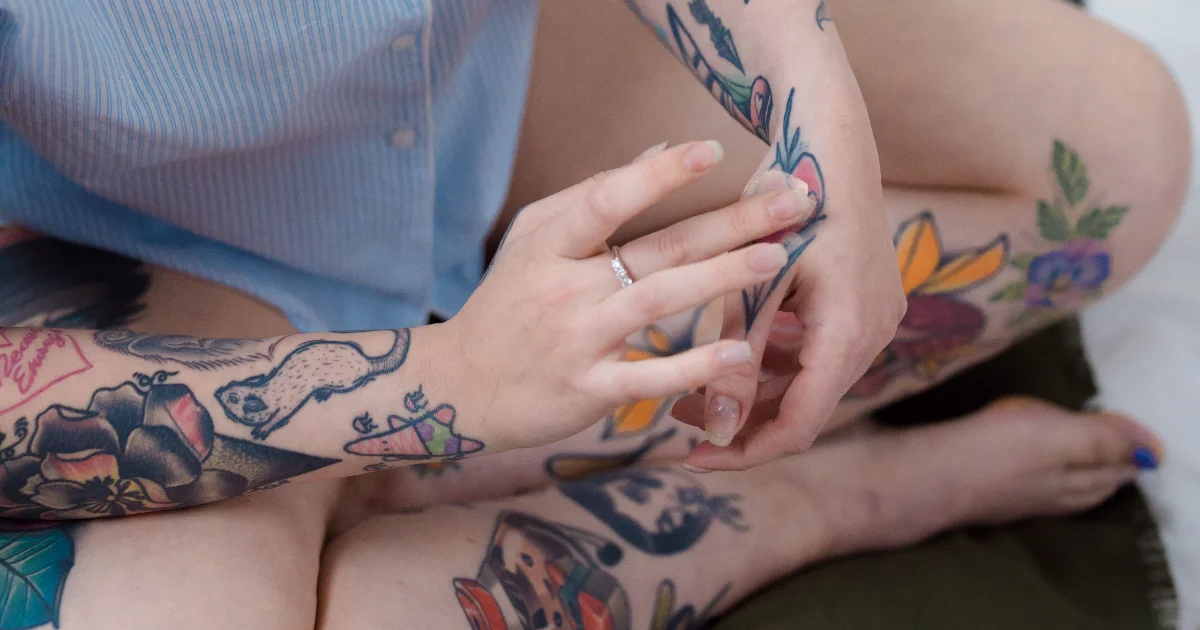
The simple guide to properly care for your tattoo, day after day
Have you just gotten a tattoo? Discover a simple and effective guide to care for your tattoo daily and preserve its colors over time.

Just got a tattoo? Discover a simple and effective guide to care for your tattoo daily and preserve its colors over time.
A Tattoo Doesn’t End When the Needle Stops
A tattoo isn’t finished once the needle is lifted. What happens in the following days and weeks is crucial: the quality of healing determines the final appearance… and how well it lasts over time.
At Ray studios, we meet many people who regret tattoos that have become blurry, uneven, or partially faded—often due to poor aftercare.
Here is a simple, day-by-day guide to help you care for your tattoo and avoid needing removal or correction later.
Days 1 to 3: The Critical Phase
Your tattoo is fresh, and your skin is still vulnerable. Treat it like a minor wound.
What to do:
- Keep the bandage or protective film applied by your artist (usually 4–8 hours)
- Wash the area with a mild, fragrance-free soap and lukewarm water
- Pat dry with a clean towel (never rub)
- Apply a thin layer of healing cream (fragrance-free, alcohol-free)
What to avoid:
- Soaking the tattoo (no baths, pools, or sea)
- Sun exposure
- Tight or synthetic clothing
- Touching the area with dirty hands
This is when infections or thick scabs can form if care is neglected—potentially damaging the tattoo permanently.
Days 4 to 10: Peeling, Scabbing, and Itching
This is the active regeneration phase. Your skin begins to renew itself.
What you may notice:
- Light peeling (like after sunburn)
- Fine scabs or dead skin
- Itching (sometimes intense)
What to do:
- Continue gentle washing (twice a day)
- Apply healing cream 2–3 times daily in a thin layer
- Wear clean, loose clothing that doesn’t stick to the area
What to avoid:
- Scratching or picking scabs (risk of pigment loss)
- Using unsuitable products (essential oils, alcohol, scented creams)
- Excessive sweating (intense workouts, sauna, steam room)
Removing a scab too early = missing ink or uneven lines → often leading to tattoo removal months later at Ray studios.
Days 11 to 30: Stabilization Phase
Your tattoo may look healed, but the deeper skin layers are still recovering.
What to do:
- Moisturize daily (morning and evening)
- Apply SPF 50+ if the area is exposed
- Monitor for dryness or irritation
What to avoid:
- Excessive sun exposure (skin remains sensitive)
- Long baths
- Abrasive or exfoliating products
Lack of UV protection is one of the main causes of fading and loss of color intensity over time.
After 1 Month: Long-Term Care
Your tattoo is now settled—but it remains a living artwork on living skin.
Good long-term habits:
- Moisturize regularly to maintain vibrancy
- Protect from the sun (even after summer)
- Avoid rapid weight fluctuations (especially on elastic areas)
- Monitor how your tattoo evolves over time
A well-maintained tattoo ages better, requires fewer touch-ups, and is less likely to be removed.
Key Takeaway
A tattoo is a piece of art on your skin, and the quality of healing determines whether it fulfills its promise.
At Ray studios, we know that aftercare is just as important as the tattoo session itself. Even a great tattoo can deteriorate without proper care.
And when that happens, we’re here to repair, lighten, or remove it—always with respect for your skin.
But our message is simple:
A well-cared-for tattoo is one you’ll love for longer.
FAQ
Can I apply just any cream after getting a tattoo?
No, it is essential to use a cream specifically formulated for post-tattoo healing.
Regular creams—especially those that are fragranced, too greasy, or alcohol-based, can irritate freshly tattooed skin, slow down the healing process, or even affect pigment retention.
At Ray studios, although we do not perform tattoos, we work with industry professionals who recommend dermatologically approved aftercare products.
Choose a neutral, hypoallergenic healing cream and apply it in a thin layer on clean skin.
Is it normal for my tattoo to itch?
Yes, itching is a natural reaction during the healing process. It usually appears between the 3rd and 7th day after getting a tattoo.
However, it is essential not to scratch, even lightly. Scratching can prematurely remove scabs, leading to ink loss, faded areas, or even small scars.
If the itching becomes intense, you can apply a soothing product specifically recommended by a tattoo professional or a dermatologist.
Can I resume sports after getting a tattoo?
Yes, but with certain precautions.
In general, it is recommended to wait 7 to 10 days, or longer depending on the size, location of the tattoo, and your healing speed. The goal is to avoid repeated friction, excessive sweating, and tight clothing that could interfere with the healing process.
Physical activity itself is not contraindicated, but it should be adapted.
At Ray studios, we always recommend respecting a skin recovery phase, even after a tattoo removal session, to maximize the quality of the results.
What if I didn’t follow the aftercare properly?
Improper aftercare can often lead to uneven areas, ink loss, or blurred lines. If this happens, there’s no need to panic: a touch-up by a tattoo artist can often correct these imperfections.
However, if the result is significantly altered or no longer meets your expectations, laser lightening can be considered before a touch-up or cover-up.
At Ray studios, we support you in evaluating your tattoo, even if it wasn’t properly maintained initially, to determine the best course of action.