How to manage pain during a tattoo removal session
Pain during laser tattoo removal is managed mainly by cryotherapy cooling, with numbing cream in some cases. What the sensation feels like, the methods used and how to prepare.

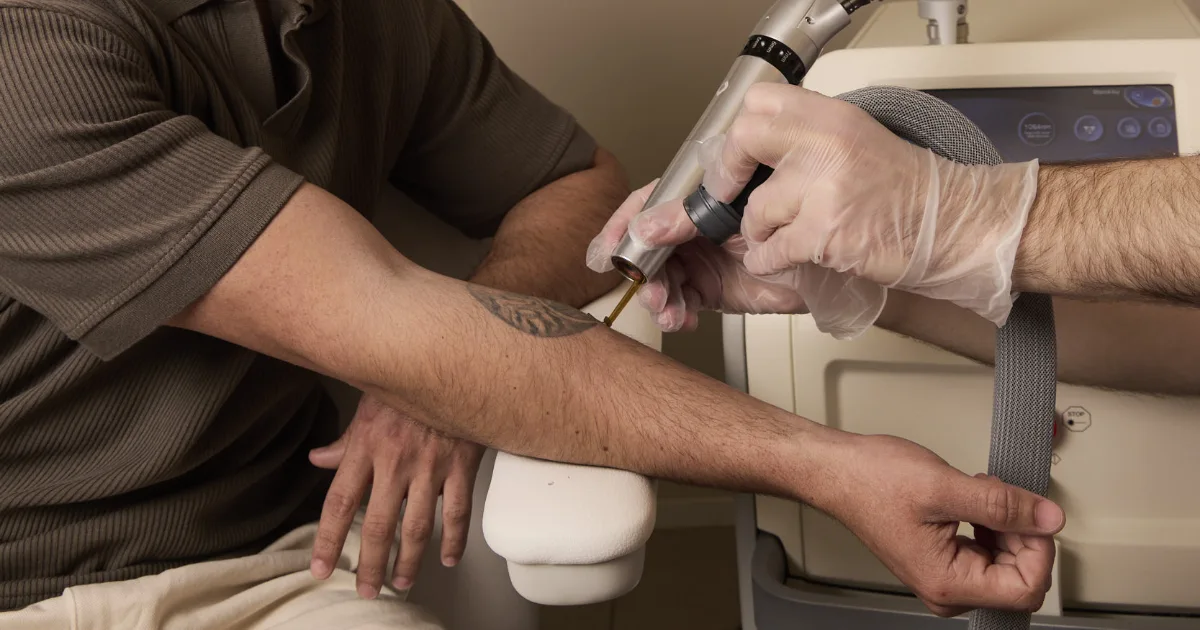
Pain during a tattoo removal session is managed mainly by cooling the skin, with a numbing cream added in some cases. At Ray studios, cryotherapy cooling chills the area before and during the laser pass, which clearly reduces the sensation. Add to that short sessions, a latest generation laser that is less painful than older technologies, and the attention of a skin therapist who adapts the pace to how you feel.
It needs to be said plainly: tattoo removal is not pain free, but the pain is brief, intermittent and well managed. It feels like a series of hot pinpricks rather than continuous suffering. Many methods exist to keep it entirely bearable, and most customers describe it as less unpleasant than they had feared. This article sets out the sensation to expect, the methods that reduce pain, what you can do before and during the session, and why trained supervision changes things. At Ray studios, a centre dedicated exclusively to laser tattoo removal, customer comfort is part of the service.
Does tattoo removal hurt? What to expect
Laser tattoo removal produces a sensation usually described as an elastic band snapped against the skin, a series of short, hot pinpricks. This description comes up consistently, and it gives a fair idea of what to expect. It is not an intense, prolonged pain, but a succession of rapid pulses.
Several things make the sensation more bearable than people imagine. First, the session is short. The actual laser time is counted in seconds or a few minutes depending on the size of the tattoo, far less than the time it took to apply the original tattoo. Second, the technology matters. The picosecond laser used today releases less heat than older lasers, which reduces the discomfort felt.
Intensity varies with several factors. The area of the body plays an important role: regions where the skin is thin and the bone close to the surface, such as the ribs, ankles, hands and feet, are more sensitive than fleshier areas. The size of the tattoo and each person's own sensitivity also come into play. It helps to know about this variability, because it lets you approach the session without excessive apprehension and to know that solutions exist for the more delicate areas.
Cryotherapy cooling: the main method
Cooling the skin with cryotherapy is the most effective and most widely used method for managing tattoo removal pain. It involves applying very cold air to the treated area, which strongly reduces the sensation linked to the laser.
The principle relies on the effect of cold on the nerve endings. Cooling the skin reduces its nerve activity and inflammation, which lowers the perception of pain. Bringing the skin temperature down can noticeably reduce the painful sensation, to a significant degree. This cooling has a double benefit: it eases pain, and it also limits heat build up in the tissue, which protects the skin and reduces the risk of a burn.
One advantage of this method is that it can be applied before, during and after the laser pass. Unlike a simple ice pack, cold air accompanies the whole session. At Ray studios, this cryotherapy cooling is part of the standard protocol. The skin is cooled beforehand, then the cold accompanies the treatment, which makes the session considerably more comfortable. This simple, chemical free approach is the foundation of pain management.
Numbing cream: benefits and limits
A numbing cream can complement cooling, but it has both benefits and limits worth knowing about. It contains local anaesthetics that temporarily desensitise the nerve endings at the surface of the skin.
Its benefit is real. Applied correctly, in a thick layer some time before the session, a numbing cream noticeably reduces surface pain. It suits people with a low pain tolerance particularly well, or areas known to be sensitive. It can be used alongside cooling for added comfort.
Its limits come down to two points. First, these creams only penetrate the surface layer of the skin, so part of the deeper sensation can remain. Second, they need time to work, often several tens of minutes, which means applying them well in advance. Their use is a considered decision, because concentration, the surface area covered and individual tolerance all need to be handled properly. Your skin therapist judges whether a cream is appropriate for your case, your skin and the area concerned. It is not something to improvise on your own, but an option to discuss at your appointment.
Is injected local anaesthetic an option?
Injected local anaesthetic is sometimes raised for large tattoos or for particularly sensitive areas. It is not part of the approach at Ray studios, and it is not something you should expect during a session with us.
Comfort at Ray studios is built on cryotherapy cooling, a numbing cream where it is suitable, short sessions and settings adapted to the area being treated. In practice this combination is enough for the large majority of customers, including on the areas most people worry about. Individual results vary.
Your skin therapist weighs up what you need area by area and adjusts accordingly, rather than applying one fixed approach to everyone. At your initial consultation you can raise any apprehension and any past painful experiences, so that your skin therapist can plan the best way to support you through the sessions.
Does the picosecond laser make the session less painful?
Yes, the picosecond laser tends to make sessions less painful than older nanosecond lasers. This difference in comfort follows directly from how it works.
The picosecond laser emits extremely short pulses and acts mainly through a mechanical effect, a pressure wave that fragments the ink, rather than through heat. Because it releases less heat, it produces a less sharp sensation and less warming of the skin. This characteristic contributes to the comfort of the session, on top of its effectiveness on the ink. At Ray studios, treatment uses the PicoWay® picosecond laser, which helps limit discomfort.
The short length of sessions reinforces this advantage. By fragmenting ink more effectively, the picosecond laser often allows shorter courses, so less time exposed to the sensation. Comfort therefore does not rest on a single method, but on a combination: a less painful technology, active cooling, short sessions and your skin therapist adapting as they go. It is all of these elements together that makes the experience manageable, including for people who are anxious about pain.
What to do before the session to limit pain
A few simple steps before the session help limit pain and keep things running smoothly. The idea is to arrive in the best possible condition.
It is advisable to arrive rested, well hydrated and not on an empty stomach, because good general condition improves tolerance. It is better to avoid alcohol the night before, as it can sensitise the skin and encourage bleeding. As for painkillers, paracetamol is generally well tolerated if you want to take some beforehand, but always check with a pharmacist or your GP first. On the other hand, it is recommended to avoid certain anti-inflammatories such as ibuprofen and aspirin just before the session, because they thin the blood and can increase bruising. It is also better not to expose the area to the sun or to tan it in the days beforehand, as tanned skin is more sensitive and more prone to pigmentation problems.
It helps to tell your skin therapist about any apprehension and any past painful experiences. That allows them to plan what to put in place, whether that is stronger cooling, a numbing cream or another option. Also mention any ongoing treatment, because some medicines influence sensitivity or healing. Good preparation is already part of managing pain.
What helps during the session?
During the session, several things help you cope with the pain, beyond the technical methods. How you approach the moment counts as much as the tools used.
Breathing is an effective ally. Breathing calmly and deeply helps reduce the perception of pain and release tension. Simple relaxation techniques, such as focusing on your breathing, lower the stress that often amplifies painful sensation. Communication with your skin therapist matters just as much. You can say at any point that the sensation is becoming difficult, and breaks are possible so you can catch your breath. The pace is not imposed at the expense of your comfort.
Cooling accompanies the laser pass and soothes the area continuously. Knowing what to expect helps too: the first pulse is often the most surprising, then the body gets used to the repeated sensation. It is reassuring to keep in mind that the session is short and that each area treated brings you closer to the end. This combination of cooling, breathing and talking to your skin therapist turns apprehension into an experience you stay in control of.
Does the pain decrease over the course of the sessions?
Yes, pain tends to decrease as the sessions go on. This is explained by the gradual reduction in the amount of ink left to treat.
At each session, part of the pigment is fragmented and then cleared by the body. There is therefore less ink to target at the following sessions, which reduces the intensity of the sensation. The tattoo becomes lighter, and the laser has less material to work on. This gradual decrease is regularly observed over the course of a removal programme. Individual results vary.
Another factor works in your favour: familiarity. After the first session, you know what to expect, which reduces apprehension and therefore perceived pain. Fear of the unknown often amplifies the sensation, and it fades once the first experience is behind you. The first sessions are generally the most striking, and comfort tends to improve afterwards. That outlook helps you approach the programme calmly, knowing that the most daunting part is usually behind you after the first few appointments.
Why trained supervision changes pain management
Being treated by a trained skin therapist improves pain management, because they have a range of solutions available and know how to adapt them to each situation. Comfort does not rest on a single method, but on informed judgement.
Your skin therapist assesses your sensitivity, the area to be treated and your apprehension, then chooses the appropriate means, from cryotherapy cooling to a numbing cream. They also adjust the laser settings and the pace of the sessions to how you feel, which a rigid one size fits all approach does not allow. This ability to personalise pain management makes a real difference, particularly for anxious people or for delicate areas.
This is why laser tattoo removal belongs with trained skin therapists, correct laser settings and a controlled environment rather than an improvised setting. At Ray studios, every session is carried out by a skin therapist, and the programme is structured by the RsAP® (Ray studios Advanced Performance) treatment protocol, from the first assessment through to follow up. That framework supports the effectiveness and safety of the treatment, and it also means genuine attention is paid to your comfort. Pain is not something you simply have to put up with, it is a factor your skin therapist actively works to reduce.
Your initial consultation
Before any treatment, an initial consultation with a skin therapist lets you discuss your sensitivity and plan how pain will be managed. It is the moment to ask every question you have about the comfort of the session.
At this appointment, your skin therapist looks at your tattoo, assesses the area and your skin type, and explains what is put in place to limit pain. You can talk about your apprehension and past experiences, so that the protocol suits your case. You leave with an RTP® projection of the number of sessions, a clear quote for the Full Remove plan, which covers unlimited sessions at a single fixed price, and a precise picture of how the programme will run.
This assessment cannot be done remotely. Analysing the area and the skin requires an in-person look, which also makes it possible to plan the best way to support you. Book an appointment at one of our centres to meet a skin therapist and get your answers.
FAQ
How many sessions are generally needed before a cover-up?
In many cases, between 2 and 4 sessions already achieve significant lightening. It all depends on the density of the tattoo, its colours and the project envisaged. The aim is not always to completely remove the tattoo but simply to reduce its visual impact. Some tattoos require more sessions, while others can be covered after relatively light lightening. A personalised assessment allows your skin therapist to determine the best strategy.
How many sessions are needed to lighten eyebrows before new pigmentation?
The number of sessions depends on many factors, including the colour of the pigment, its age and its density. In many cases, one to three sessions already achieve significant lightening. Some more resistant pigments may require more time. The aim is not necessarily to completely remove the old eyebrows, but to achieve a base that is light enough to allow good quality new pigmentation.
Does laser tattoo removal hurt a lot?
Laser tattoo removal causes a sensation similar to an elastic band snapping against the skin, with brief, warm tingling. It is not an intense, continuous pain, but a series of rapid pulses, over a short session lasting from a few seconds to a few minutes. The intensity varies depending on the area: regions where the skin is thin and the bone close to the surface, such as the ribs, ankles, hands or feet, are more sensitive than fleshier areas. Individual sensitivity also plays a role. Many methods can ease the discomfort, starting with cooling the skin through cryotherapy. Most customers find the experience more bearable than they expected, especially as the discomfort decreases over the course of the sessions.
How is pain eased during a tattoo removal session?
The main method is cooling the skin through cryotherapy, very cold air applied before, during and after the laser passes. This cold significantly reduces the sensation of pain and protects the skin from overheating. At Ray studios, this local anaesthesia through cryotherapy is part of the protocol. Depending on the case, an anaesthetic cream applied before the session can complement this cooling, and for extensive or highly sensitive tattoos, an injectable local anaesthetic may be considered. The picosecond laser used, which generates less heat than older lasers, also contributes to comfort. Finally, breathing calmly, communicating with your skin therapist and taking breaks help you get through the session more comfortably. Your skin therapist adapts everything to how you feel.
Can an anaesthetic cream be used before tattoo removal?
Yes, an anaesthetic cream can be used to reduce surface pain, but its use is decided by your skin therapist. These creams temporarily desensitise the nerve endings in the skin and are particularly suited to sensitive individuals or delicate areas. However, they have two limitations: they only penetrate the surface layer, so some of the deeper sensation may remain, and they need time to take effect, often several tens of minutes. The concentration, area of application and tolerance must be overseen by your skin therapist. This is therefore not something to improvise yourself, but an option to discuss during the initial consultation, alongside cooling through cryotherapy.
Does the pain decrease over the course of tattoo removal sessions?
Yes, pain tends to decrease over the course of the sessions. With each pass, some of the ink is broken down and then eliminated by the body, meaning there is less pigment left to treat in subsequent sessions, which reduces the intensity of the sensation. The tattoo becomes lighter and the laser has less material to target. In addition, there is the effect of familiarity: after the first session, you know what to expect, which reduces apprehension and therefore the perceived pain. The first sessions are generally the most intense, and comfort tends to improve afterwards. Individual results vary. This perspective helps you approach the process with more confidence, knowing that the most challenging part is often behind you from the start.