How the tattoo artist affects laser removal difficulty
The way a tattoo was applied directly affects how hard it is to remove: ink density, depth and precision all matter. Individual results vary.

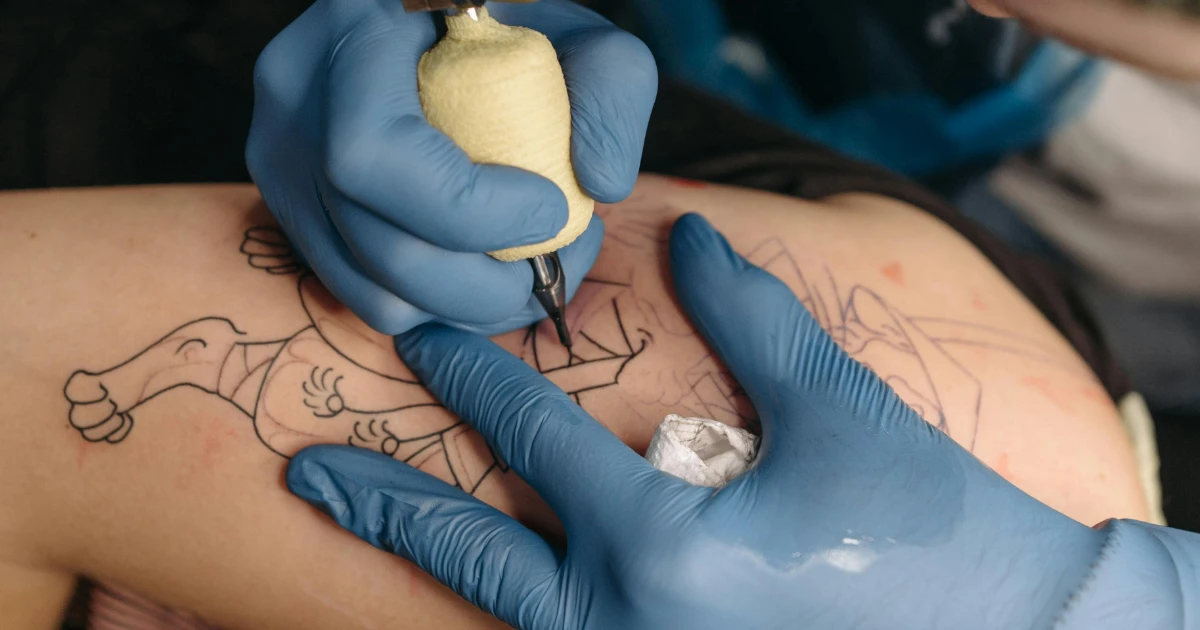
When it comes to erasing a tattoo, not all tattoos are equal, and where the tattoo came from, in particular the style, the experience and the equipment used by the tattoo artist, has a direct influence on how complex the removal will be. At Ray studios, our skin therapists always take this into account when assessing a protocol, because the work of an amateur tattoo artist is not treated in the same way as that of an experienced professional. Here is why.
Amateur tattoo vs professional tattoo: what are the differences?
The amateur tattoo artist
- Uncalibrated and sometimes basic tools (improvised machines, poor quality inks).
- Ink often deposited irregularly or too superficially.
- Shaded areas, imprecise fills, variable density.
The result: a more unpredictable tattoo, but paradoxically one that is sometimes easier to erase, because the ink sits less deeply in the skin.
The professional tattoo artist
- High performance tools, strict hygiene, high quality inks.
- Ink deposited more deeply and in a dense, even way.
- Pigments that are often more resistant, with a wide variety of complex colours.
The result: a tattoo that is visually more controlled, but often harder to remove, because of the quality and concentration of the pigments.
The impact of artistic style
The artist's style also influences removal:
- Black and minimalist tattoos: simpler to erase, especially line work.
- Watercolour or realistic tattoos: difficult, because they contain complex doses of layered pigment.
- Thick lettering or solid black fills: a longer treatment time, because of the high ink density.
At Ray studios, we adapt the laser settings (wavelength, power, frequency) to the style of the tattoo, to work towards an even result. Individual results vary.
Depth and ink pressure
A tattoo placed too deeply, which is often the case with some experienced artists or with heavily saturated styles (blackout, tribal):
- Is more stable over time, but also more resistant to the laser.
- Needs more sessions and a more gradual approach to avoid stressing the skin.
Conversely, a tattoo placed too superficially (common with amateur work):
- May fade more quickly,
- But can also leave patchy areas of pigment.
The type of ink used
Inks vary enormously from one artist to another:
- Professional inks: more stable and more pigmented, but sometimes more resistant to the laser, especially red, green and blue inks.
- Cheap or homemade inks: less predictable in composition, but often easier to fragment, because they are less concentrated.
At Ray studios, our skin therapists adapt the laser wavelength to the likely composition of the inks used, when that composition is not known.
Artists specialising in cover ups: multiple layers of ink
Some artists who specialise in cover ups apply:
- Several layers of pigment,
- Very high densities to mask an older tattoo.
This makes removal particularly complex, because several layers of overlapping ink have to be worked through, often in different colours.
Key points
The type of tattoo artist, their experience, their technique and their equipment all have a direct impact on how difficult removal will be. This factor should always be taken into account when building a reliable protocol. At Ray studios, our skin therapists assess each tattoo carefully so the sessions suit your skin, your ink and the history written under it. Book an initial consultation to discuss the Full Remove plan, unlimited sessions at a single fixed price.
FAQ
Is a tattoo done by a professional always harder to remove?
Not always, but generally speaking, a tattoo done by a professional is more complex to remove. The inks are often of better quality, injected more deeply and more densely, which makes them more resistant to laser pulses. This does not mean that a well-done tattoo cannot be removed, but rather that it requires more technical rigour and patience. At Ray studios, each session is adjusted according to the quality of the ink and the depth of the pigment. Individual results vary.
Does an amateur tattoo always fade more easily?
In most cases, yes, because amateur tattoos are often less deep and less even, and the inks used are sometimes unstable or diluted. This makes elimination faster under the effect of the laser. However, these tattoos can sometimes show pigment irregularities, with denser areas or others that are very superficial, making fading less predictable. At Ray studios, we adapt the protocol to avoid any over-correction on lighter areas.
Can you tell by eye whether a tattoo will be difficult to remove?
Not always. Visual appearance gives some clues (density, saturation, precision of the line), but does not allow for a complete evaluation. That is why at Ray studios we systematically carry out a dermatoscope analysis, a specialised tool that allows us to observe the actual depth of the ink in the dermis. This precise assessment is essential to establish a reliable and safe treatment plan, and to best estimate the number of sessions required.
Are coloured tattoos easier to remove when done by professionals?
Not necessarily. Professional-grade coloured inks are often more resistant because they are chemically stable. Some shades (such as green, light blue or red) contain specific pigments that respond less well to certain wavelengths, even with a picosecond laser. This means that, even when well executed, a professional coloured tattoo may require more sessions than an amateur monochrome one, particularly if several colours are layered.
Can the number of sessions be estimated based on the type of tattoo artist?
The tattoo artist’s style and technique do indeed influence the protocol. A professional, dense, crisp and heavily pigmented tattoo will generally require more sessions to be fully removed. Conversely, an amateur or imperfect tattoo may fade faster, but more unevenly. That said, many other factors come into play: location on the body, depth, colours, skin type, and so on. At Ray studios, a thorough consultation remains essential for any realistic estimate.