Cosmetic Freckle Tattoo Removal with Ray studios
Regret your tattooed freckles? Laser removal can fade them, under certain conditions. Specifics, risks and how Ray studios handles this type of request.

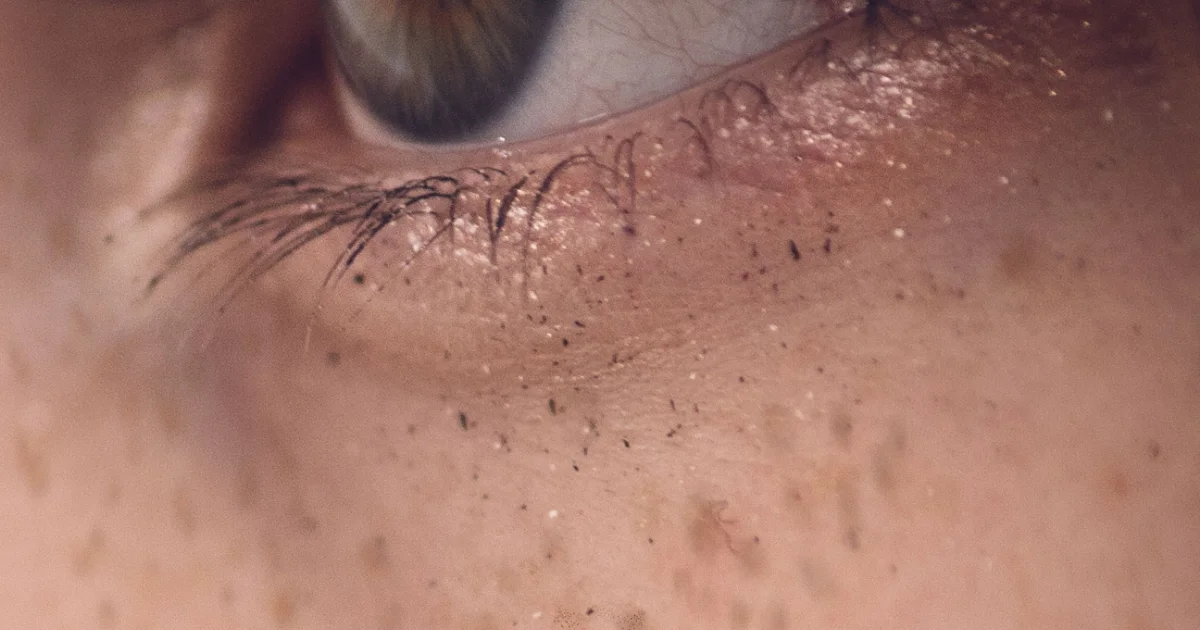
Yes, it is possible to remove cosmetic freckles with a laser, but this is a delicate treatment that follows its own rules. Unlike a conventional tattoo, these "fake freckles" are made with semi-permanent make-up pigments, often based on iron oxide and titanium dioxide, which can react unexpectedly to laser light. The main challenge is therefore not simply to break down the pigment, but to do so while anticipating a well-documented phenomenon: pigment darkening.
Because they sit on the face, in a thin and expressive area, these dots call for particular precision and caution. That is why their removal should only be entrusted to a trained skin therapist, on a suitable laser, and always preceded by a test. This article explains what cosmetic freckles are, why their removal is a case apart, the risk of temporary darkening, how the treatment works and how many sessions to plan for. At Ray studios, a centre dedicated exclusively to laser tattoo removal, this type of request is handled by a skin therapist.
What is a cosmetic freckle tattoo?
Cosmetic freckles are small dots of pigment placed in the skin of the face to imitate natural freckles. This dermopigmentation technique, also called "fake freckles", belongs to semi-permanent make-up: the aim is a healthy, sun-kissed look, and sometimes to disguise slight hyperpigmentation or small scars.
Contrary to a widespread belief, these dots are not truly "temporary". They fade over time, but the pigment stays implanted in the skin and does not always disappear completely or evenly. That is often when regret sets in: the colour turns, the dots become too visible or badly spaced, or the effect no longer matches what you want. Removal then becomes the way to get clear skin back.
One technical point is essential to understand: permanent make-up pigments are not the same as artistic tattoo inks. They frequently contain mineral pigments such as iron oxide, which gives flesh, brown and reddish tones, and titanium dioxide. It is precisely these components that make their removal more subtle than that of a conventional black tattoo.
Can tattooed freckles really be removed?
In the vast majority of cases, yes, but the outcome depends on the depth of the pigment and its composition. A superficial cosmetic tattoo, made with a pigment that responds well to the laser, generally fades well. The difficulty increases when the pigment has been placed deep in the dermis or when it resists fragmentation more strongly.
Removal happens layer by layer: the laser first targets the most superficial pigments, then works deeper session after session. It is a gradual process, and its exact outcome cannot always be predicted from the outset, which is why a precise assessment is important before starting. The good news is that cosmetic freckles are usually small and cover a limited area, which makes treatment simpler than for extensive permanent make-up on the eyebrows or lips.
Even so, this removal should be approached without ready-made promises. Depending on the pigment and its depth, complete lightening is often achievable, but residual traces remain possible in some cases. Individual results vary. Only an in-person assessment allows your real situation to be evaluated and an honest projection of the expected result to be given.
The key point: the risk of pigment darkening
The main phenomenon to know about before removing cosmetic freckles is pigment darkening, meaning an immediate blackening of the pigment under the laser. This is what most distinguishes this removal from that of a conventional tattoo, and it should be explained before any treatment.
This change is explained by the chemistry of the pigments. Flesh, brown and reddish tones contain iron oxide: under the impact of the laser, ferric oxide (Fe2O3, rust coloured) can be reduced to ferrous oxide (FeO, black), which turns the dot grey or black instantly. Titanium dioxide can also take part in this phenomenon. It is a well-documented reaction, common with light permanent make-up pigments.
The essential nuance is that this darkening is not a treatment failure. The pigment, once black, then absorbs laser light very well and can be broken down during the following sessions. This change is therefore often a stage in the journey rather than a dead end. The real risk would be discovering it unprepared: that is why a skin therapist systematically carries out a test on a small area before treating the whole zone, in order to anticipate how the pigment reacts and adapt the strategy.
Why the face calls for a controlled environment
Cosmetic freckle removal concerns the face, a thin, expressive area close to the eyes, which calls for a strictly controlled environment. Pigment here is not treated as it would be on an arm or a back: the margin for error is smaller and the aesthetic consequences of poor handling are more visible.
Several reasons make this caution necessary. Facial skin is thinner and more reactive, which means laser settings must be precise to avoid skin damage or pigmentation disturbances. The proximity of the eyes requires suitable eye protection and a controlled technique. Finally, the pigment darkening described above must be anticipated and managed by a trained professional who can explain the stages and adapt the treatment.
Laser tattoo removal on the face is not something to entrust to just anyone. It requires trained skin therapists, correct laser settings and a controlled environment. Choosing a dedicated centre is therefore not a simple precaution, it is your assurance that the treatment will be adapted to your skin, your pigment and the delicacy of the area.
How removal works at Ray studios
At Ray studios, cosmetic freckle removal always begins with an assessment and a test, before any treatment of the whole area. This step shows how the pigment reacts, including any darkening, and allows the parameters to be adjusted accordingly.
The treatment uses the PicoWay® picosecond laser, which fragments pigment into very fine particles thanks to ultra-short pulses and a photo-acoustic effect rather than heat. These particles are then eliminated naturally by the body. This technology, combined with several wavelengths, targets the pigment precisely while limiting heating of the skin, a decisive advantage on an area as delicate as the face.
The whole journey is structured by the RsAP® (Ray studios Advanced Performance) treatment protocol, from the initial assessment to session follow-up, and every session is carried out by a skin therapist. Comfort is supported by skin cooling, and the pace is adapted to healing. This personalised approach matters particularly for cosmetic pigments, whose reaction varies a great deal from one person to another.
How many sessions and over what period?
The number of sessions varies with the depth of the pigment, its composition and how it reacts to the laser, and there is no universal figure. As cosmetic freckles are generally small and limited in area, their treatment is often shorter than that of permanent make-up on the eyebrows or lips, but every case remains unique.
Two factors can lengthen the journey. First, pigment injected deeply needs more passes to be reached layer by layer. Second, if pigment darkening occurs, one or more extra sessions are needed to clear the pigment that has turned black. As with any tattoo removal, sessions are spaced several weeks apart so the skin can heal and the body can eliminate the fragmented particles.
Rather than relying on a generic estimate, the most reliable approach is to obtain a personalised projection. At Ray studios, the initial consultation leads to an RTP® projection of the number of sessions, established after analysis of your skin, the pigment and the result of the test. That is the only way to get a realistic view of the timeline.
Cosmetic freckle removal
Ray studios has three centres dedicated exclusively to laser tattoo removal, where this type of request can be handled by a skin therapist.
Each centre applies the same RsAP® protocol, the same PicoWay® picosecond laser and the same standards of safety and comfort. Your choice of centre mainly depends on what is convenient for you: the quality of care is identical, delivered by skin therapists in a dedicated environment.
Your initial consultation
Before any treatment, an initial consultation with a skin therapist allows your cosmetic freckles to be assessed and the process to be anticipated. It is the ideal moment to ask your questions about pigment darkening, the number of sessions and the expected result.
During this appointment, the skin therapist examines your skin and the pigment, may carry out a test to observe how it reacts, and explains the strategy suited to you. You leave with an RTP® projection of the number of sessions and a clear view of the journey, along with the details of the Full Remove plan: unlimited sessions at a single fixed price.
Because the face is a delicate area, this evaluation cannot be done remotely: analysing the pigment and the skin requires an in-person assessment. Book an appointment at one of our centres to meet a skin therapist and get your answers.
FAQ
Can fake freckles be removed with a laser?
Yes, in most cases cosmetic freckles can be removed with a laser, though it is a delicate procedure. These "fake freckles" are created with semi-permanent makeup pigments, frequently iron oxide based, which behave differently from conventional tattoo inks. The outcome depends mainly on how deeply the pigment was deposited and on its composition: shallow pigment generally clears well, while deeper pigment takes more sessions. Because these marks are small and cover little surface area, treating them is often simpler than an extensive area of permanent makeup. A prior medical assessment, including a test on a small area, is essential to evaluate your case and anticipate how the pigment will react.
Why can my tattooed freckles darken after laser treatment?
This is a phenomenon known as paradoxical darkening, and it is common with permanent makeup pigments. Flesh, brown and reddish shades contain iron oxide: under the laser, ferric oxide (rust) is reduced to ferrous oxide, which is black, turning the freckle grey or black immediately. Titanium dioxide can contribute as well. The darkening can be alarming, but it does not mean the treatment has failed. Pigment that has turned black then absorbs laser light very efficiently and can be cleared over the following sessions. It is often a normal stage of the process. To anticipate it, a doctor always carries out a test on a small area before treating all of the freckles.
Is facial tattoo removal safe?
Facial tattoo removal is safe when carried out by a doctor, in a medical setting and with a suitable laser. Because facial skin is thin, reactive and close to the eyes, the treatment demands precise settings, proper eye protection and a controlled technique. This is exactly why laser tattoo removal in France is a medical procedure restricted to doctors. Carried out under those conditions, with a picosecond laser that limits heating of the skin and a preliminary test, removing cosmetic freckle tattoos proceeds under good safety conditions. The main risk to be aware of is pigment darkening, which the doctor manages and factors into the treatment plan.