How to Reduce the Risk of Hyperpigmentation After Tattoo Removal
Just had a tattoo removal session? Discover how to reduce hyperpigmentation risks with the right steps and advice from skin therapists.

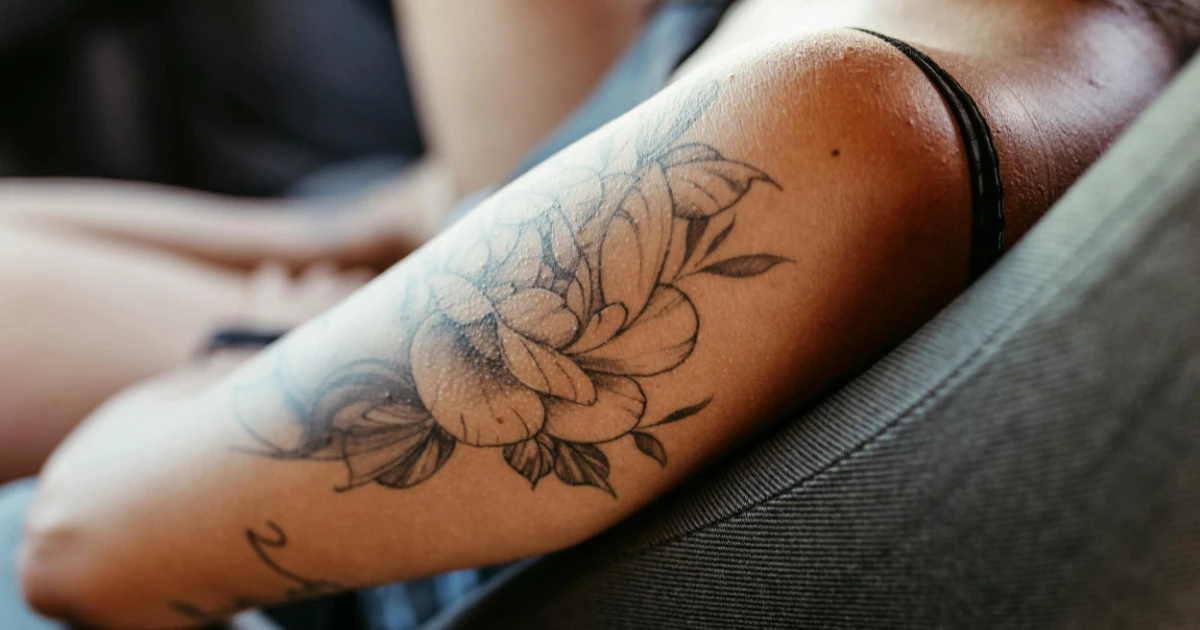
Hyperpigmentation is a possible reaction after laser tattoo removal, particularly in more sensitive or pigmented skin. This abnormal pigmentation can be temporary, but it is often a source of concern for customers.
At Ray studios, skin therapists put in place personalised prevention plans to reduce this risk and help support an optimal aesthetic result. Individual results vary. Here is how to act effectively.
What is post-removal hyperpigmentation?
After a laser treatment, the skin can react by producing excess melanin, leading to:
- Localised brown spots on the treated area,
- Temporary darkening of the skin,
- A contrast with the surrounding skin.
This is a normal skin protection response, but it can be limited or avoided with the right precautions.
Who is most at risk of hyperpigmentation?
- Darker phototypes (olive to very dark skin),
- People prone to brown spots after injuries or irritation,
- Customers exposed to sun too soon after their session,
- Recently tanned or sensitised skin.
At Ray studios, a phototype and skin history assessment is systematically carried out before starting a tattoo removal programme.
How to reduce the risk of hyperpigmentation?
Avoid all sun exposure
- No sun exposure for one week to 10 days before and after each session,
- Consistent use of SPF 50+ sunscreen even after healing,
- Wearing covering clothing to protect the treated area.
Sun exposure is the main trigger of post-laser hyperpigmentation.
Properly prepare your skin before the session
- Intensely moisturise the skin in the weeks beforehand,
- Stop irritant products (acids, retinoids) at least 7 days before,
- Make sure the skin is not tanned or irritated.
Healthy skin reacts better to treatment and heals more evenly.
Follow rigorous post-treatment care
- Gently clean the area,
- Apply a suitable repairing cream,
- Do not scratch or rub if itching or scabs occur,
- Continue daily moisturising for several weeks.
At Ray studios, skin therapists recommend care suited to your skin type for each phase of treatment.
Properly space out sessions
- Respect the healing time between two sessions (generally 6 to 8 weeks),
- Do not try to "speed up" the treatment at the expense of your skin's health.
A programme that is too aggressive increases the risk of pigmentation issues.
Monitor your skin and get in touch quickly if anything seems unusual
- Persistent redness,
- Early appearance of dark spots,
- Unusual sensations.
Any unusual reaction should be reported so your care programme can be adjusted quickly.
Key takeaway
The risk of hyperpigmentation after tattoo removal can be greatly reduced with careful preparation, strict sun protection and suitable support from trained skin therapists. Individual results vary. At Ray studios, skin therapists support you at every stage to help preserve the radiance and quality of your skin, throughout your tattoo removal journey.
FAQ
If I have medium or dark skin, should I avoid tattoo removal altogether?
Absolutely not. Tattoo removal is entirely possible on medium to dark phototypes, provided a strict protocol is followed. At Ray studios, our skin therapists tailor the wavelength, the laser power and the intervals between sessions to your skin type. We use exclusively the latest generation picosecond lasers, particularly effective on darker skin while reducing the risk of burns or post-inflammatory hyperpigmentation. An initial skin assessment is always carried out before starting treatment. Individual results vary.
How long does hyperpigmentation last if it occurs after tattoo removal?
Post-laser hyperpigmentation, when it occurs, is most often temporary. It can appear in the weeks following a session and gradually fade over a few months, provided appropriate care is followed. At Ray studios, we systematically recommend a personalised post-treatment protocol, including soothing creams, strict sun protection and follow-up recommendations. The key factor is consistency: the more closely the instructions are followed, the faster and more fully the skin recovers, without pigmentation after-effects. Individual results vary.
Can I use brightening creams to prevent hyperpigmentation?
No, not without advice from a skin therapist. Many so-called "brightening" creams contain irritant active ingredients, some of which are photosensitising, such as hydroquinone or certain acids. On skin weakened by laser treatment, these substances can worsen inflammation, delay healing or cause irreversible depigmentation. At Ray studios, we advise against any self-medication after laser treatment. However, if a risk of hyperpigmentation is identified, our team of skin therapists can recommend a supervised skincare treatment, depending on your skin's profile.
Does the picosecond laser reduce the risk of hyperpigmentation compared to older lasers?
Yes, significantly so. The picosecond lasers used at Ray studios deliver ultra-short pulses, which fragment the ink through shockwave action, without generating prolonged heat in the skin. This technology helps preserve the integrity of the dermis and limit inflammation, the main cause of post-inflammatory hyperpigmentation. Compared to older nanosecond lasers, picosecond lasers are more effective, faster and better tolerated, particularly on darker skin tones. It is now the benchmark technology for high-precision, high-safety tattoo removal.
Is follow-up care mandatory after laser tattoo removal?
Yes, follow-up care is essential to ensure the safety of the treatment. At Ray studios, each customer benefits from personalised support, with check-in points between sessions, and skin therapist availability in case of side effects. Hyperpigmentation can be prevented, monitored and, if needed, treated effectively from its first signs. Follow-up also allows the protocol to be adjusted if the skin shows an unexpected reaction. This is an essential step in our commitment to quality and to respecting your skin health.