Beauty salon or specialist laser studio: the real differences
Behind the words "tattoo removal centre", practices differ widely. Training, technology, safety and follow-up: here is what really sets a specialist laser studio apart.

When you start looking into tattoo removal or lightening a pigmented area, the same question comes up every time: should you go to a general beauty salon or a specialist laser studio?
Both exist, and they sometimes use very similar language, but the differences run deep, and they can have a direct impact on the safety of your skin and on the final result.
At Ray studios, studios dedicated to laser tattoo removal, this distinction matters. It shapes not only the quality of the treatment, but also the way any risks are handled.
A fundamental difference: how the treatment is set up
The first difference between a general beauty salon and a specialist laser studio lies in how the treatment itself is set up.
In a general beauty salon, laser work usually sits alongside a long list of other services. It relies on techniques, equipment and protocols that are deliberately limited, because the setting is not built around laser tattoo removal.
In a specialist studio, laser tattoo removal is the only focus. It works deep in the dermis and calls for a proper assessment beforehand, a precise protocol and structured follow-up.
That difference has very concrete consequences for the type of lasers used, the training of the people operating them and the way reactions are managed.
The lasers used: not every device is equal
Not every laser is available to every studio.
General beauty salons tend to use devices whose power and settings are deliberately limited. These machines can suit certain superficial treatments, but they quickly show their limits on dense, coloured or deep tattoos.
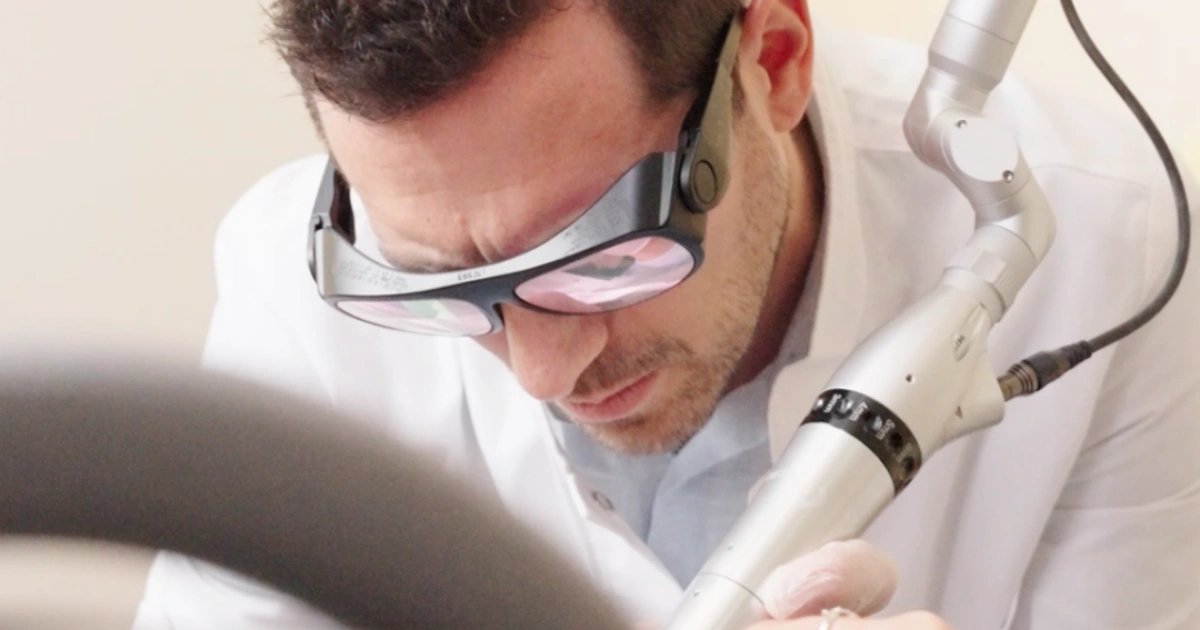
Specialist studios such as Ray studios use latest generation lasers, in particular picosecond lasers, able to break up pigment efficiently while respecting the skin. Because of their power and precision, this equipment calls for trained operators and a controlled environment.
Training and responsibility
In a general beauty salon, staff are trained to operate a device as one service among many. They are not in a position to assess your skin in depth or to guide you through an unusual reaction.
In a specialist studio, the treatment is carried out by skin therapists trained specifically on laser tattoo removal. That means:
- an assessment before the first shot,
- a protocol adapted to your skin type and to the tattoo,
- the ability to recognise and guide you through inflammatory, pigment or scarring reactions.
This difference in responsibility is often underestimated by customers.
Managing risks and reactions
Laser tattoo removal carries risks, even when it is done well: redness, blisters, temporary pigment changes, inflammatory reactions.
In a general beauty salon, the handling of these effects is limited. If something unusual happens, the customer is often sent elsewhere.
In a specialist studio, follow-up is part of the treatment. At Ray studios, the protocols include:
- clear aftercare instructions,
- follow-up between sessions,
- direct support if an unusual reaction appears.
The protocol: standardised or personalised
General beauty salons often work with fairly standardised protocols, built around the device they happen to own.
A specialist studio adapts the treatment to each customer:
- phototype,
- skin type,
- nature of the pigments,
- age and depth of the tattoo,
- skin history.
At Ray studios, this personalised approach is central. The laser is a tool, not an automatic solution.
Transparency and promises about results
Some salons advertise fast results or a very low number of sessions. These promises can be appealing, but they do not always reflect how tattoo removal actually works.
The process is clear: removal is gradual and depends on your immune system. A specialist studio prefers a realistic message, sometimes a more cautious one, but one that holds up over time. Individual results vary.
Cost: a difference that makes sense
A specialist studio can look more expensive at first glance. The difference comes down to:
- the technology used,
- the training of the skin therapists,
- the follow-up,
- the way risks are managed.
At Ray studios the offer is the Full Remove plan: unlimited sessions at a single fixed price, so what you are comparing is the overall quality of the care.
Why Ray studios is a specialist studio
Ray studios has chosen to do one thing only, laser tattoo removal, with:
- latest generation picosecond lasers,
- skin therapists trained specifically on laser,
- individualised protocols,
- careful follow-up between sessions,
- clear and transparent information.
This approach treats removal not as a one-off appointment, but as a controlled journey from your initial consultation onwards.
Key points
The difference between a general beauty salon and a specialist laser studio is not a label. It is about technology, training, responsibility, safety and the quality of the follow-up.
When it comes to your skin, and to a treatment that works deep below the surface, trained skin therapists, correct laser settings and a controlled environment make all the difference.
At Ray studios, that standard is the basis of every treatment.
FAQ
Can a beauty salon safely perform laser tattoo removal?
A beauty salon can use certain laser devices, but within a limited regulatory framework. The devices allowed are generally less powerful and less precise than professional-grade lasers. This may be enough for very superficial marks, but it quickly shows its limits on dense, colourful or deep tattoos. If a skin reaction or complication occurs, a beauty salon is not equipped to provide complete follow-up care.
What does the professional framework actually change for the customer?
The professional framework changes everything, starting from the initial consultation. A skin therapist is able to assess the skin, the tattoo, your history and potential risks before recommending a treatment. This allows the laser settings to be precisely adapted, helps prevent unwanted effects and ensures monitoring between sessions. At Ray studios, this professional approach is essential to help ensure both safety and quality of results. Individual results vary.
Are the lasers used really different?
Yes. Clinics use state-of-the-art medical-grade lasers, including picosecond lasers, which are reserved for clinical use due to their power and precision. These lasers can break down pigments more finely, across a wider colour spectrum, while being gentler on the skin. Beauty salons do not have access to this type of equipment, which directly affects the effectiveness and safety of the treatment.
If a complication occurs, what happens?
In a beauty salon, complication management is limited: the customer is usually referred to an outside skin therapist. In a specialised centre, care is immediate and built into the protocol. At Ray studios, ongoing follow-up allows any unusual skin reaction to be anticipated, monitored and treated quickly, which helps reduce the risk of after-effects. Individual results vary.
Why is a specialist centre often more expensive?
The cost reflects the overall level of care provided: advanced laser technology, skin therapist supervision, an initial consultation, follow-up between sessions and professional responsibility. This is not simply the price of a session, but the quality and safety of the treatment journey. In the case of laser tattoo removal, this investment is directly linked to the long-term preservation of the skin. Individual results vary.