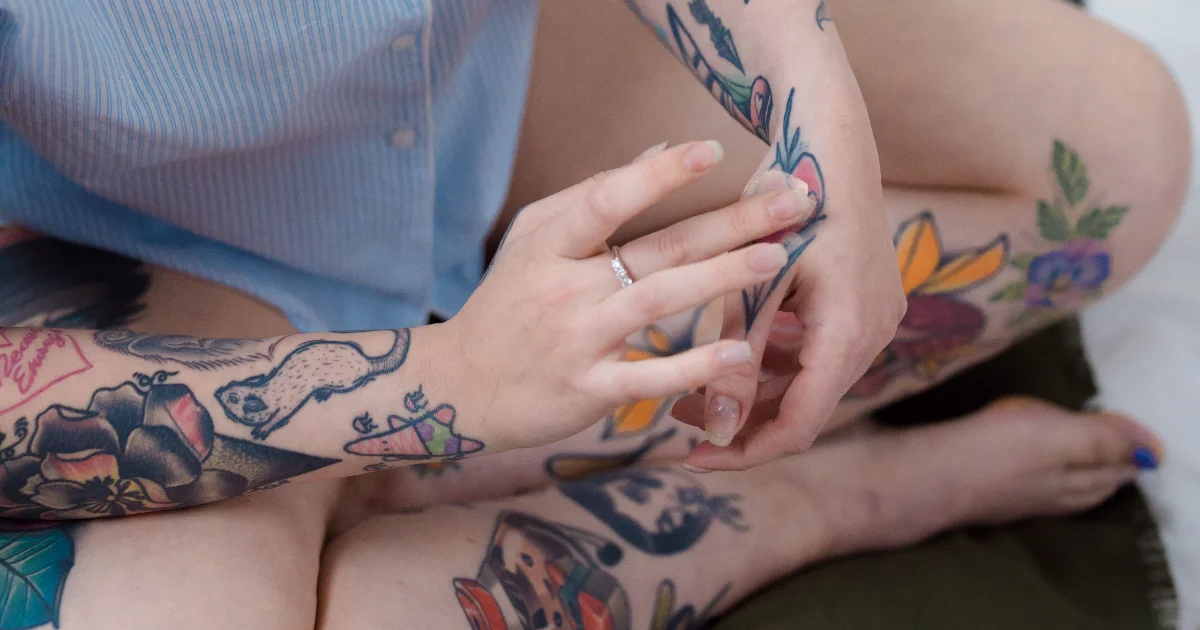
Why You Should Avoid Self-Treating After Tattoo Removal
Caring for your skin after laser tattoo removal is not something to improvise. Self-treating with unsuitable products can compromise the whole healing process.

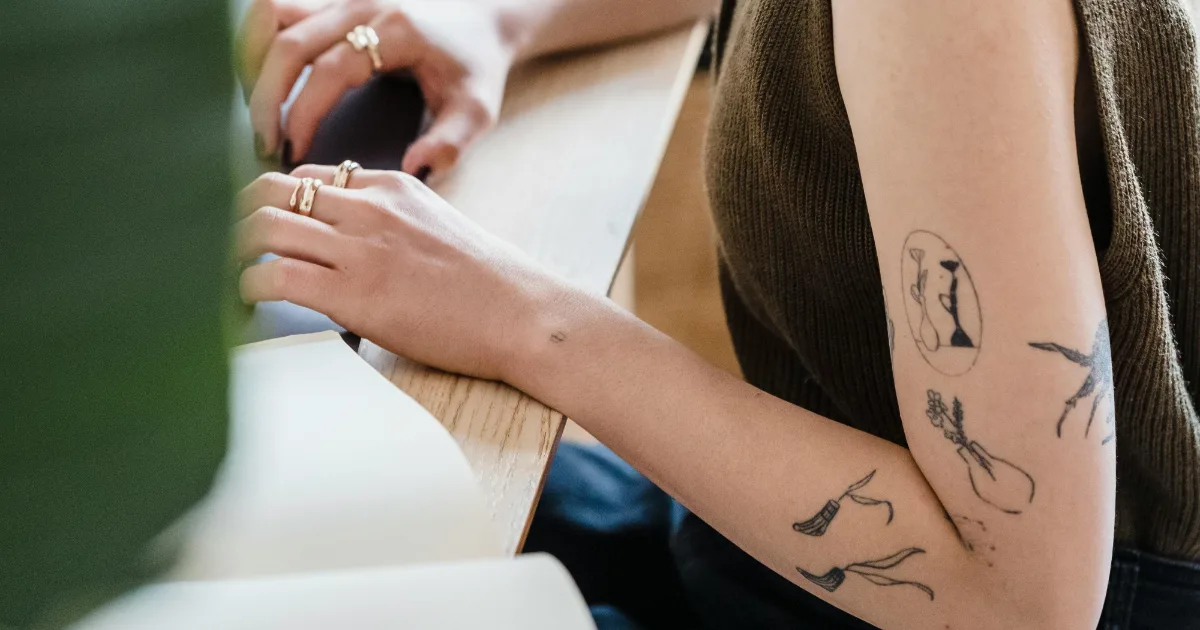
After a laser tattoo removal session, the skin begins a natural healing process. Some discomfort can appear, such as redness, slight sensitivity or a feeling of tightness, so it is essential to follow the aftercare protocol given to you, without giving in to the temptation to self-treat.
At Ray studios, skin therapists are clear on this point: poor aftercare can compromise your results and weaken your skin. Here is why self-treating should be avoided after tattoo removal.
What does “self-treating” mean after tattoo removal?
It means:
- Using products without advice from your skin therapist,
- Applying creams, ointments or home remedies to the treated area,
- Changing or inventing an aftercare protocol without your skin therapist's agreement.
Even a step that seems harmless, such as using a "natural" cream or a standard antiseptic, can interfere with the skin's repair process.
Why is self-treating risky?
Risk of irritation and burns
Some products contain:
- Alcohols,
- Fragrances,
- Harsh antiseptic agents,
which can irritate weakened skin and cause chemical burns on the treated area.
Risk of poor healing
Applying unsuitable products can:
- Delay healing,
- Encourage thick scabs to form,
- Increase the risk of permanent scars or marks.
At Ray studios, we favour gentle, repairing products formulated specifically for skin after a laser session.
Risk of infection
Careless use of home remedies or non-sterile creams can:
- Contaminate the fragile area,
- Cause a bacterial infection,
- Require antibiotic treatment, or even compromise the final quality of the removal.
Risk of pigmentation problems
By disrupting healing:
- Hyperpigmentation (dark patches) or hypopigmentation (lightened areas) can appear.
- These side effects can be long-lasting and sometimes difficult to correct.
A suitable protocol, set by skin therapists at Ray studios, is essential to help protect the evenness of your skin. Individual results vary.
What should you do after a tattoo removal session?
Follow the recommendations given by your skin therapist closely.
Use only the products advised, such as:
- Neutral repairing cream (fragrance-free and alcohol-free),
- Sterile saline solution to clean the area,
- SPF 50+ sunscreen once initial healing is complete.
Keep an eye on the skin and report any unusual reaction to your skin therapist.
Key points
After laser tattoo removal, careful aftercare is the key to protecting the look and health of your skin. Avoid self-treating: a suitable aftercare protocol supports healing without compromising your results. Individual results vary. At Ray studios, skin therapists support you through every phase of your tattoo removal for a safe, structured journey that respects your skin.
FAQ
Can I apply Biafine or a standard antiseptic after a laser session?
No, unless explicitly recommended by a skin therapist. Biafine, like many common antiseptics, can disrupt healing or increase post-laser inflammation. After tattoo removal, only specific repair creams approved by our skin therapists should be used.
Are natural oils like sweet almond or coconut suitable?
Not immediately. Although they are seen as gentle, some plant oils can clog pores, create an occlusive film or irritate skin that is still fragile. At Ray studios, we recommend waiting until healing is complete before using any oil, even a natural one.
Is it serious if I mistakenly apply an unsuitable product?
It can be. If you notice persistent redness, unusual tingling or a burning sensation after using a product that wasn't recommended, contact your skin therapist or the Ray studios team promptly. Early reaction often helps prevent worsening or scarring.
When can I resume my usual skincare products?
Once the skin has healed completely, which takes between 7 and 14 days depending on your skin type and the area treated. We always recommend checking with your skin therapist before going back to creams, serums or make-up, to avoid any adverse reaction.
What should I do if my skin feels tight or itchy after my session?
This is a common sensation during the regeneration phase. Never scratch, even lightly. Only apply the prescribed care (such as a repairing cream) in a thin layer. If the discomfort persists, contact the Ray studios team to adjust your protocol.