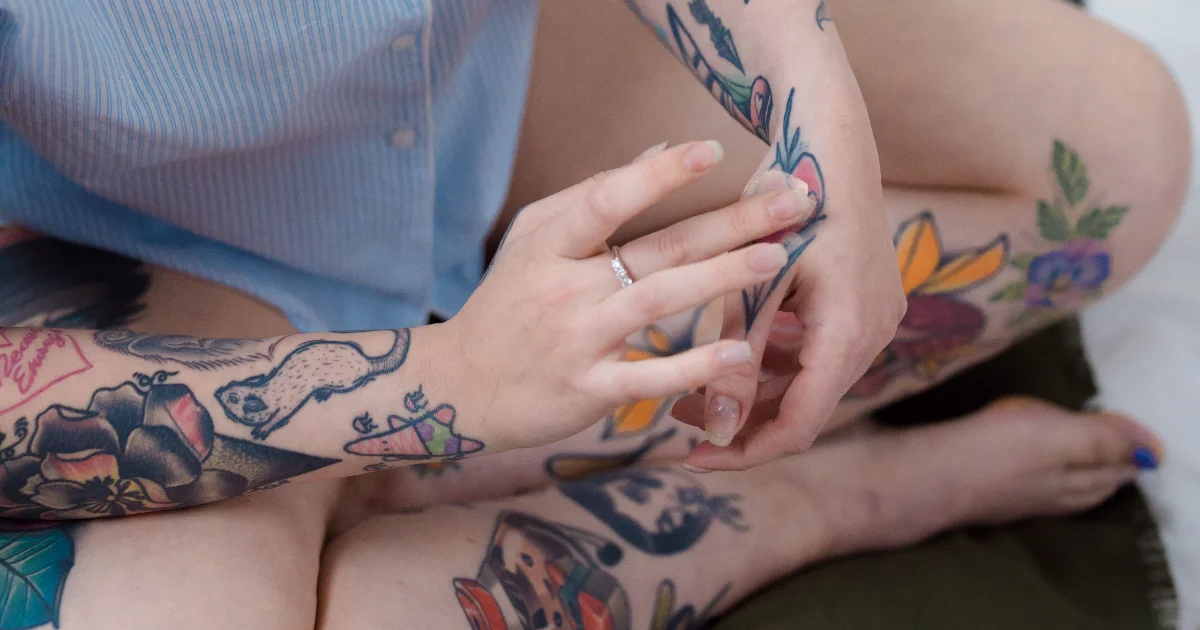
Why Some Tattoos Blur Over Time and What You Can Do
Lines thicken, outlines spread and fine detail fades. Here is why some tattoos lose their sharpness over time, and what your options are if the result no longer suits you.

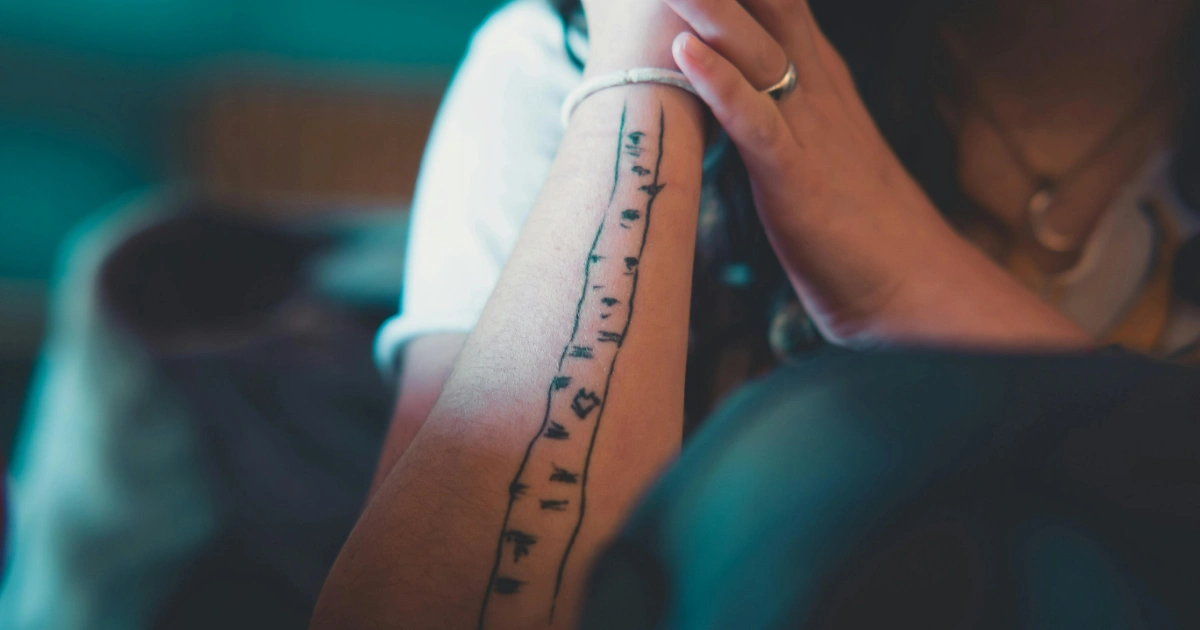
A tattoo is often thought of as a permanent, crisp and stable mark, expected to cross the years without changing. In reality, though, many tattoos evolve. Lines thicken, outlines lose their precision, details merge into one another. This change, sometimes gradual and sometimes rapid, is one of the most common reasons people enquire about tattoo removal.
At Ray studios, we regularly meet customers who are surprised by this evolution. The tattoo was not badly done in the first place, it has simply changed. Understanding why a tattoo becomes blurred helps you anticipate how it will age, and also consider suitable options when its appearance no longer matches the original intention.
A tattoo sits in living tissue
Unlike a drawing on an inert surface, a tattoo is made in the skin, a living organ that carries a blood supply and renews itself constantly. During tattooing, pigments are deposited in the dermis, a deep but dynamic layer that is exposed to the action of the immune system.
Over time, the body recognises the ink as a foreign body. Macrophages, the immune cells, gradually try to break down and transport the pigment particles. This mechanism is slow but continuous. It explains why the outlines of a tattoo can lose their sharpness, even when the tattoo was perfectly executed to begin with.
Depth of injection: a delicate balance
The depth at which the ink is placed plays a decisive role in how the tattoo evolves. If the ink is deposited too superficially, it can fade prematurely. If it is deposited too deeply, it can spread within the dermis, causing a progressive widening of the lines.
This spread is one of the most frequent causes of blurring. It is sometimes visible within the first few years, particularly on tattoos made up of fine lines or small details. Poorly controlled depth can turn a precise design into an imprecise one over time.
Fine lines and micro tattoos: a structural fragility
Fine line tattoos appeal for their elegance and their discretion. However, they are also the most vulnerable to ageing. Their delicacy leaves little margin: the slightest movement or widening of the pigment becomes visible.
Over the years, a very fine line can double in width, without the tattoo being considered a failure. This is often poorly anticipated when the tattoo is designed. At Ray studios, we regularly explain that certain aesthetic trends are more sensitive to the test of time.
The role of the sun in loss of sharpness
Sun exposure is one of the most aggressive factors for a tattoo. UV rays alter the structure of the pigments, speed up their fragmentation and encourage a loss of contrast. A tattoo exposed regularly without sun protection ages faster, becomes duller and more blurred.
Even several years after it was done, a tattoo remains sensitive to the sun. Sun protection is not only an aftercare precaution: it is an essential long term habit for preserving the sharpness of the outlines.
The area of the body: an often underestimated factor
Not all locations age in the same way. Areas where the skin is thin, mobile or subject to repeated friction are particularly at risk. The hands, the fingers, the neck, the feet and the ribs are areas where tattoos tend to change more quickly.
Conversely, more stable areas such as the upper back or the thighs generally hold up better over time. The choice of location is therefore a key element, and one that is often overlooked at the planning stage.
Skin ageing and bodily changes
With age, the skin loses elasticity and density. Collagen fibres slacken and the structure of the dermis changes, which has a direct impact on the appearance of tattoos. Weight variation, pregnancy and certain hormonal changes accentuate these transformations.
A tattoo can therefore distort, stretch or contract, changing how readable the design is. These changes are natural, but they can reinforce the impression of blurring, particularly on geometric or symmetrical designs.
When blurring becomes an aesthetic concern
In some cases, the blurring goes beyond the natural change you would expect. Lines become indistinct, details merge and the tattoo no longer matches the image the person has of themselves. This gap is often the starting point for a correction or a removal.
At Ray studios, these situations are approached individually by trained skin therapists. The aim is not to remove everything as a matter of course, but to understand the cause of the blurring and point you towards the most suitable option.
Tattoo removal as a correction tool
Tattoo removal does not always mean complete erasure. Partial removal can lighten a blurred tattoo or prepare the skin for a more precise cover up. Picosecond lasers such as PicoWay® make it possible to work in a targeted way while respecting the skin.
Carried out by trained skin therapists, with the correct laser settings and in a controlled environment, tattoo removal becomes a tool in the service of aesthetics rather than a drastic response to regret. Individual results vary.
Key points
A tattoo that becomes blurred is neither rare nor abnormal. It results from a combination of biological, technical and environmental factors. Understanding these mechanisms lets you anticipate, choose better and, where necessary, act with full information.
At Ray studios, every customer is supported with a transparent and personalised approach, whether you want to understand how a tattoo is evolving, correct a result that has become blurred or consider removal in optimal conditions. It starts with an initial consultation, where your skin therapist assesses your tattoo, sets out the RsAP® treatment protocol and gives you an assessment. Our Full Remove plan covers unlimited sessions at a single fixed price.
FAQ
Does a tattoo inevitably become blurred over time?
All tattoos change over time, as skin is a living tissue. However, this change varies greatly depending on the quality of the tattoo, the area of the body, the type of design and lifestyle habits. Some tattoos remain clear for decades, while others fade more quickly, particularly when they are very fine or heavily exposed to the sun.
Can you prevent a tattoo from blurring?
It is possible to limit the ageing of a tattoo by protecting the skin from the sun, moisturising it regularly and avoiding significant weight fluctuations. However, the choice of tattoo artist, pigments, design and placement remains decisive from the outset and largely determines how the tattoo will evolve over the long term. Individual results vary.
Can a blurred tattoo be corrected without removal?
In some cases, a touch-up or cover-up may be enough to improve the appearance of a blurred tattoo. However, when the lines are too diffused or the pigments have spread deeply, tattoo removal is often necessary to restore a clean and clear base before any correction.
Can tattoo removal make blurring worse?
No, not when it is carried out with suitable technology and a strict protocol. At Ray studios, the picosecond laser fragments the pigments with precision, without causing additional spreading, provided that healing times and the spacing between sessions are respected.