Visible tattoos: what to know for your job and future plans
Visible tattoos can shape how you are seen at work. What to weigh up before getting one, sector by sector, and what Ray studios offers if you later want it removed.

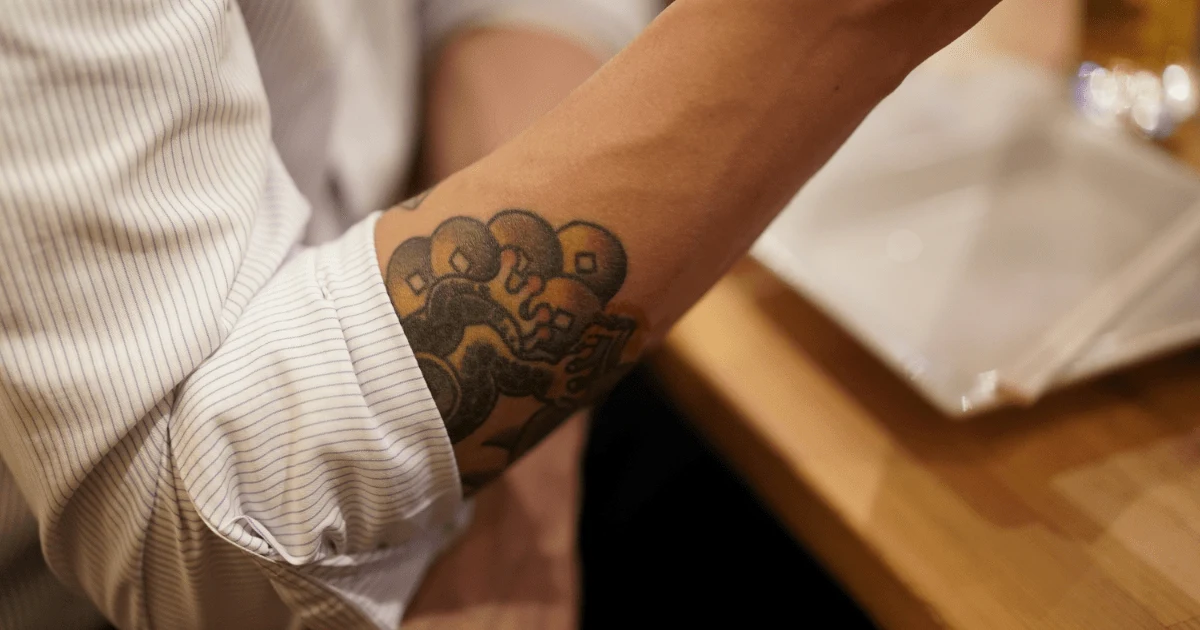
A tattoo is a personal, intimate and sometimes artistic choice. But depending on the area you have tattooed, it also becomes a social or professional message, sometimes owned with confidence, sometimes poorly received.
At Ray studios, every week we work with people who want to remove a visible tattoo: on the hands, the neck, the face, the forearms.
Often because it no longer matches their plans in life, or because it closes off certain opportunities.
So before you commit to a tattoo on show, here is what you need to know to think it through properly.
What counts as a "visible" tattoo?
A tattoo is said to be "visible" when it is:
- On show in standard work clothing (blouse, t-shirt, trousers),
- Hard to hide without accessories (scarf, dressing, long sleeves),
- Noticed immediately in a professional or social setting.
The areas concerned:
- Hands, fingers, wrists,
- Forearms, throat, back of the neck,
- Face, ears, legs if you wear skirts or shorts,
- Ankles and feet in summer.
Tattoos at work: tolerance varies
Attitudes to tattoos are changing, but they remain very different from one sector to another:
Traditional or regulated roles:
- Police, defence forces, law, aviation, healthcare,
- Strict expectations around neutrality, uniform and representing the organisation.
A visible tattoo may be prohibited, frowned upon, or need to be covered at all times.
Customer-facing or representative roles:
- Hospitality, retail, education, events, communications,
- More open, but still shaped by aesthetic codes.
The visibility and the content of a tattoo can influence a hiring decision or a promotion.
Creative or self-employed roles:
- Fashion, art, design, tattooing, music, freelance work,
- Usually a more tolerant environment, one that may even value originality.
Even here, a tattoo that is poorly received or poorly done can work against a professional portfolio.
And if your life changes?
A visible tattoo can become an issue in the case of:
- A career change into a more formal sector,
- Study or retraining where image is scrutinised,
- Moving abroad to a country with a more conservative culture,
- Personal changes (parenthood, a break-up, spirituality).
At Ray studios, we often meet people who would not have made the same choice a few years later.
Questions to ask yourself before a visible tattoo
- Am I certain I want this tattoo on show to everyone?
- Do I feel able to stand over it, or cover it if I need to?
- Do I know the rules of my job or my college?
- Is this design timeless and meaningful to me?
If you are unsure, start with an area that is easy to cover. Better a tattoo you show than a tattoo you hide every day and resent.
And if I want it removed later?
Yes, that is possible. At Ray studios, we offer:
- Targeted removal on a small area (a design on the hand, a name, a symbol),
- Lightening before a cover-up, so a more suitable design can be built,
- Gradual protocols that respect the skin, even on sensitive areas such as the neck or the fingers.
Key points
A visible tattoo can be owned, considered and powerful. But it can also become a source of difficulty or discomfort as your life moves on.
Before you have it inked, weigh up the pros and cons against your plans, your job and your future.
And if one day you change your mind, because you, your style or your path have changed, Ray studios is here to help your skin move on gently. Individual results vary.
FAQ
Does tattoo removal hurt on the hands or neck?
The sensation varies from person to person, but these areas can be more sensitive as the skin is thinner and more exposed. That said, the pain generally remains manageable and the sessions are very short (just a few minutes). At Ray studios, we use the latest generation equipment and can apply a numbing cream if needed. The aim is to keep the experience comfortable and ensure the treatment goes smoothly. Your skin therapist will explain everything during the initial consultation.
Do finger tattoos fade well?
These are delicate areas, but yes, it is entirely possible to remove tattoos from the fingers. Due to the thinness of the skin, the density of the ink and frequent exposure to water and sunlight, the process can take a little longer than on other parts of the body. Several sessions are often needed to achieve good results, but progress becomes visible gradually. Individual results vary. Skin therapists adjust the laser power and protocol at each session to maximise effectiveness while protecting the skin. Proper hydration and suitable aftercare between sessions are also essential for good healing.
Does tattoo removal leave marks on hands or the neck?
Not if it's done properly. As these areas are more visible, our priority is to preserve skin quality. We use the latest generation lasers that target only the pigment without damaging surrounding tissue. The protocol is adjusted according to the area, skin type and tattoo history. When carried out under the right conditions, tattoo removal leaves no scarring or lasting discolouration. Good aftercare following each session is also essential to avoid any unwanted marks and ensure proper regeneration.
Can I come for a consultation just to assess my options?
Yes, of course. The initial consultation is there to answer all your questions. It's an opportunity to review your tattoo, your expectations and the treatment in detail. During this meeting, a skin therapist will assess the feasibility of the tattoo removal and explain the protocol to you. You will leave with an estimate of the number of sessions required and personalised recommendations. Our aim is for you to be able to make your decision with confidence, fully informed. At Ray studios, this initial consultation with a skin therapist is provided with no obligation.