Tattoo Removal for Military and Regulated Careers
Tattoos are still restricted in some careers. Ray studios skin therapists plan your tattoo removal around recruitment timelines with the Full Remove plan. Individual results vary.


In certain professions, a tattoo can still be an obstacle or be strictly regulated. Whether you are joining the Defence Forces, An Garda Síochána, or working in certain regulated professions, tattoo removal sometimes becomes an essential prerequisite.
Why do some professions restrict tattoos?
Even though attitudes are changing, in many sectors tattoos remain subject to specific rules, particularly for reasons of:
- Uniformity and discipline (defence forces, policing, emergency services).
- Professional image (policing, the judiciary, aviation).
- Visual neutrality, especially when the tattoo is visible in uniform.
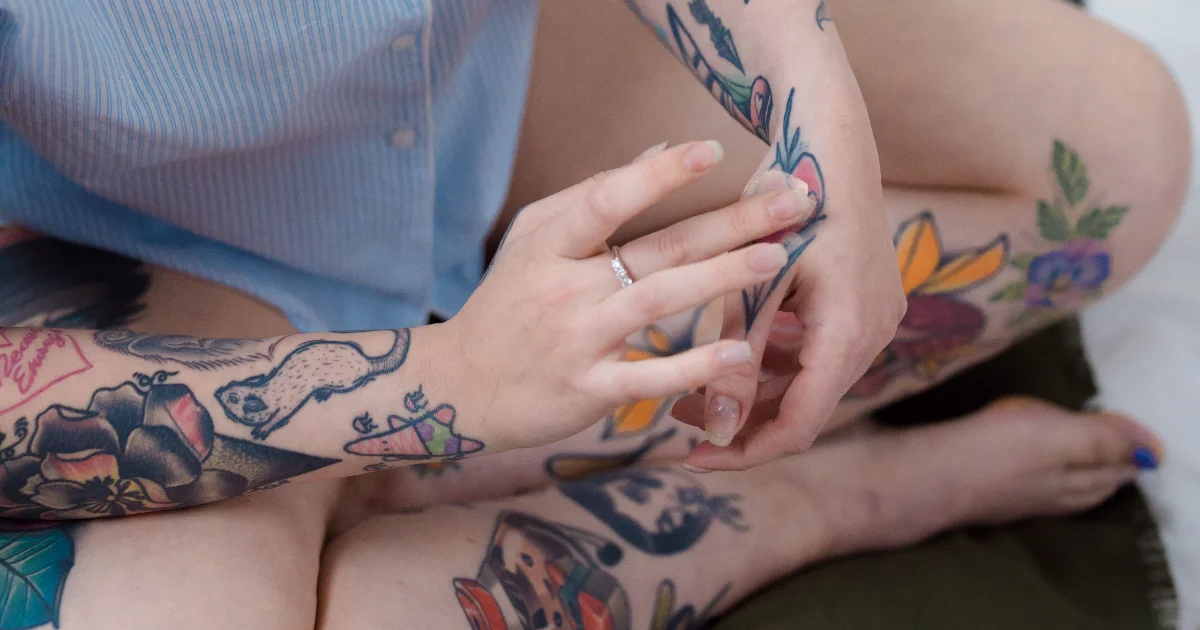
Some competitions or recruitment processes state clearly that visible tattoos (arms, hands, neck, face) must be absent or discreet to be accepted.
Tattoo removal: a route into these careers
Plan ahead around the recruitment calendar
A tattoo removal process can take several months, or more than a year, depending on:
- Its colour, density and depth.
- Your skin type.
At Ray studios, skin therapists recommend starting tattoo removal at least 12 to 18 months before competitions or selection processes, to allow enough time to:
- Complete the treatment sessions.
- Allow the skin to heal fully and naturally.
- Present visually even skin during recruitment checks.
Adapt the strategy to your career plan
Every project is different. Some candidates want to:
- Fully remove their tattoo.
- Lighten a tattoo in order to alter or cover it afterwards.
- Fade a tattoo so that it meets recruitment criteria.
At Ray studios, skin therapists offer personalised treatment protocols based on the needs and objectives of each customer.
How does a tattoo removal treatment work at Ray studios?
At Ray studios, every journey starts with:
- An initial consultation and assessment carried out by trained skin therapists.
- A precise diagnosis, based on the characteristics of your tattoo and your skin.
- A care and follow-up protocol suited to your skin and to your professional timeline.
Using latest generation picosecond lasers, correct laser settings and a controlled environment, Ray studios works to deliver results safely while minimising risks to the skin. Individual results vary.
Our offer is the Full Remove plan: unlimited sessions at a single fixed price.
Key points
Tattoo removal can be a real asset when you are aiming for demanding careers in the military or regulated sectors. At Ray studios, the support is designed to help you remove your tattoos safely and within a realistic timeframe, in line with your career plans.
FAQ
Which tattoos cause problems for recruitment?
The most problematic tattoos are those visible in professional attire: on the neck, face, hands or forearms. These areas are generally exposed, particularly when wearing a uniform or regulation attire. Each institution (armed forces, gendarmerie, police, customs, etc.) sets its own acceptability criteria, but the common rule is that the tattoo must neither damage the institution's image nor be incompatible with the values it upholds. Tattoos with political, religious, discriminatory or violent connotations are systematically disqualifying.
How long does it take to completely remove a tattoo before a competition?
The duration of a tattoo removal depends on several factors: the density and depth of the ink, the colours used, your skin type, and the type of laser used. Generally, it takes between 8 and 18 months for a complete tattoo removal, with a session every 6 to 8 weeks. You should also allow time for healing between the last session and the competition. Early planning is therefore essential.
Can you start a tattoo removal process while preparing for a military or police entrance exam?
Yes, this is entirely possible, and even recommended if you are aiming for an entrance exam within one to two years. The tattoo removal process can span a long period, with necessary breaks between sessions to allow the skin to heal. Ideally, you should start this process as early as possible, alongside your physical and theoretical preparation, so that you can attend the exam without aesthetic or medical constraints.
Are all types of tattoos removable?
In theory, yes. However, certain pigments, particularly light green, turquoise blue and yellow, are more difficult to remove completely. Amateur tattoos often fade more easily than professional tattoos, which are deeper and more heavily pigmented. After an initial consultation, the skin therapist will be able to draw up a personalised programme outlining the estimated number of sessions, the expected results and the precautions to follow.