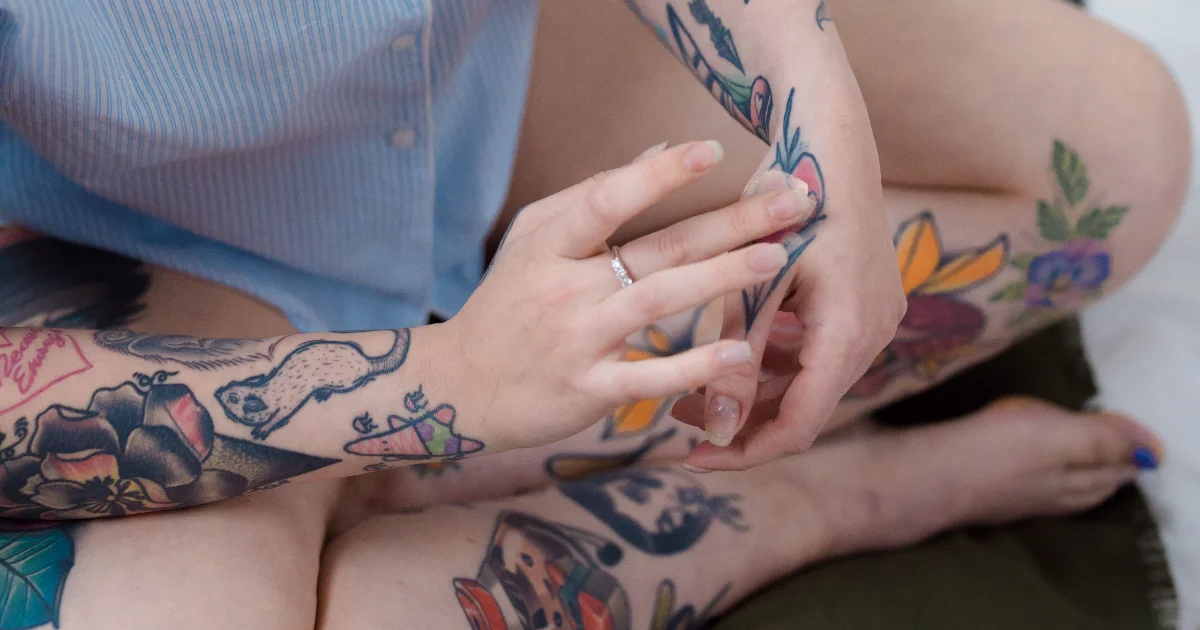
Tattoo Removal and Sun Exposure: Before and After a Session
Sun exposure does not rule out tattoo removal, but there are conditions. What to do before and after a laser session, and why fake tan is a hard no.


Sun exposure does not stop you removing a tattoo. There are conditions attached, both before and after a session, and they are worth understanding before you book.
Why tanning matters in tattoo removal
Beyond its cosmetic appeal, a tan is a natural defence mechanism. It is how the skin protects itself against excessive ultraviolet radiation, which is harmful in quantity. The body responds by producing more of a biological pigment called melanin. That same pigment is what gives darker skin its tone, which is why people with a higher phototype tan and burn less readily. Melanin production can also be triggered artificially, in sunbeds for example.
Laser removal works by targeting artificial pigment, meaning the tattoo ink, using the contrast between the ink and the surrounding skin. That contrast is what determines how the laser is configured. Where it is wide enough, as with black ink on pale or lightly tanned skin, removal remains straightforward. In other cases, particularly for tattoos in colours lighter than black, we recommend waiting a month after your last significant exposure before treating.
Can I go in the sun before a session?
Time in the sun is not in itself a problem, and in most cases your session can go ahead as planned. There are exceptions: intense or prolonged exposure in the ten days before your appointment, or sunburn anywhere on the area being treated.
Where you can, plan ahead by covering the tattoo with clothing for a few days beforehand. Where that is not practical, as with eyebrow tattoos or semi-permanent makeup, apply SPF 50+, the highest protection factor available.
Covering up matters because prolonged sun exposure before a session makes the treatment less effective and raises the risk of dyschromia, meaning patches of skin that end up lighter or darker than the surrounding area.
Artificial tanning is a different matter. Do not book a session after using self-tanning creams or UV sunbeds. Both are designed to reproduce the effect of the sun on melanin production, and both carry their own risks to the skin. Neither is a safe substitute for a natural tan in this context.
Can I go in the sun after a session?
The guidance afterwards closely mirrors the guidance beforehand. Where possible, stay out of the sun in the days following your session. This gives the treated area the best conditions to heal, and to heal faster. If exposure is unavoidable, cover the skin with clothing or a dressing where you can, and use SPF 50+ where you cannot.
As above, avoid artificial tanning of any kind after a session. You will also need to avoid water activities for 72 hours, including swimming in the sea or a pool, along with steam rooms, saunas and any dry heat. All of this supports healing, alongside keeping the area dressed and regularly moisturised with petroleum jelly or a rich emollient. Our full aftercare protocol covers the rest.
If you are unsure, one of our skin therapists can advise you. If they judge that it is better to wait, they will tell you how many days. There is no contraindication to spacing your sessions out. Pausing your treatment, for however long, does not cost you the benefit of the sessions already completed, and with the Full Remove plan covering unlimited sessions for a single fixed price, a summer break does not add to what you pay either.
Is there a removal method that works around sun exposure?
No. No removal method exempts you from the guidance above. It is worth adding that few methods other than laser are recommended at all, under any conditions. Removal is safe when carried out professionally, but it is not a trivial procedure. Skin is a fragile organ and deserves to be treated as one.
This is the same reason tattooists advise against sun exposure before or after getting tattooed, and recommend keeping the area moisturised. The risks involved are broadly the same. Rather than take a chance on it, book a session at a specialist studio.
FAQ
Can you have a tattoo removal session after tanning?
Yes, but with caution. Recently tanned skin contains more melanin, which can distort the laser settings and increase the risk of dyschromia (light or dark patches). If you have been exposed intensely to the sun or have sunburn, it is best to postpone your session. At Ray studios, we advise waiting at least 10 days after strong sun exposure or protecting the tattooed area with clothing or an SPF 50+ cream.
Should you avoid the sun after laser tattoo removal?
Yes, it is strongly recommended that you avoid sun exposure after a tattoo removal session. The skin, sensitised by the treatment, needs to heal in optimal conditions. To do this, protect the area with clothing, a dressing, or a factor 50+ sunscreen. Premature exposure could lead to poor healing or pigmentation marks. Individual results vary.
Is artificial tanning compatible with tattoo removal?
No. Techniques such as self-tanners or UV tanning beds should be avoided before and after a tattoo removal session. They increase the concentration of melanin in the skin, which compromises the effectiveness of the laser and increases the risk of side effects. In addition, they present dangers for the skin in general. For your safety, Ray studios strongly advises against any artificial tanning as part of a laser treatment.
Is there a tattoo removal method compatible with sun exposure?
No tattoo removal method allows sun exposure without precaution. Even alternative techniques (not widely recommended) such as chemical tattoo removal require rigorous sun protection. Picosecond laser, used at Ray studios, is the safest and most effective method, provided the recommendations before and after sessions are followed: avoid the sun, moisturise the skin and space out sun exposure. Individual results vary.