Laser tattoo removal does not burn your skin: the facts
Contrary to popular belief, laser tattoo removal does not burn the skin. It breaks up ink pigments into micro-particles without damaging the surrounding tissue.

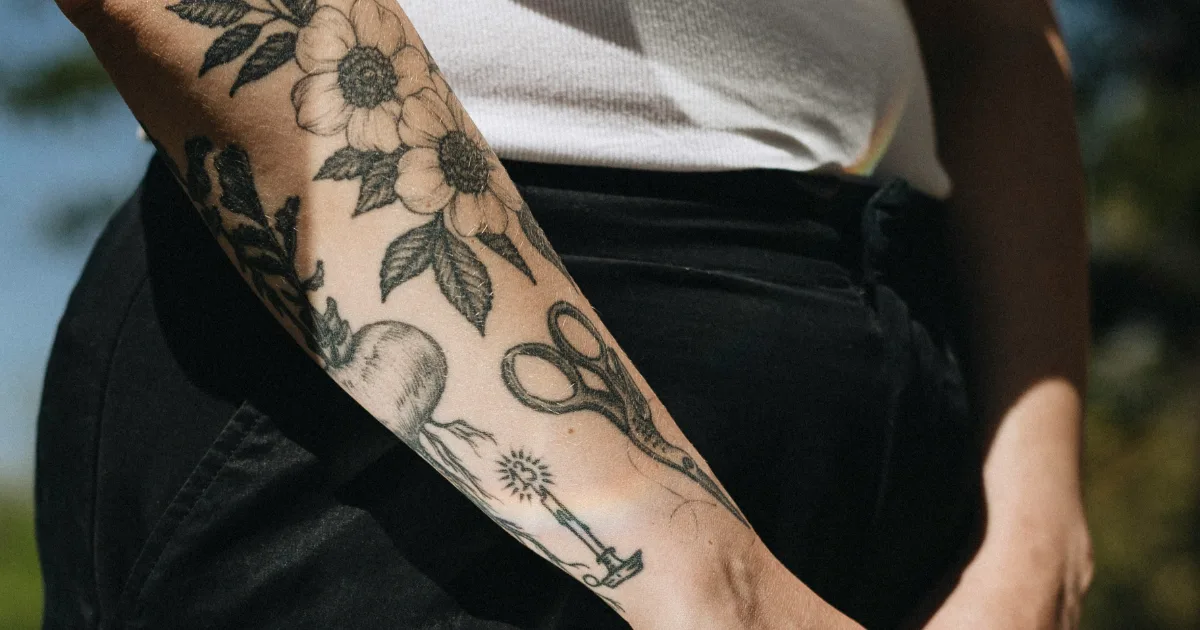
Laser tattoo removal is surrounded by misconceptions, and one of the most common is the idea that the laser burns the skin. At Ray studios, we hear this understandable concern often. Yet thanks to technological advances, in particular picosecond lasers, tattoo removal today is a safe, controlled approach that respects the skin. It is time to clear up the myths.
How does laser tattoo removal actually work?
Contrary to popular belief, the laser does not burn the skin. Here is what happens during a session:
- The laser emits ultra-short pulses of light that pass through the surface of the skin without destroying it.
- These pulses specifically target the ink particles held in the dermis.
- Under the energy, the pigments shatter into micro-particles, which the immune system gradually clears.
The modern technology used at Ray studios, picosecond lasers, works with extreme precision without harming the surrounding tissue.
Why does laser tattoo removal not burn the skin?
A selective action on the pigments
The light beam is calibrated to target the ink only, not the skin. That selectivity is what makes the treatment effective while preserving the integrity of the skin.
Controlled energy
The latest generation of lasers, such as those used at Ray studios, works with very tightly controlled energy levels:
- No deep heating of the skin.
- Less risk of burns or thermal damage compared with older technologies.
Expertise matters
Command of the protocol by trained skin therapists is just as important. At Ray studios, every session is adjusted according to:
- The colour and depth of the tattoo.
- The customer's skin type.
- The skin reaction observed.
This personalised follow-up keeps the treatment safe from start to finish.
Why some sensations of heat are normal
It is worth being clear that:
- A sensation of heat or tingling is normal during and after the session.
- Slight redness or swelling can appear temporarily, which reflects the healing process being triggered.
- These effects usually settle within a few hours to a few days, depending on individual sensitivity. Individual results vary.
These reactions are not burns.
Key points
Modern laser tattoo removal is a reliable technique that is not traumatic for the skin, when it is carried out with quality equipment, correct laser settings and trained skin therapists in a controlled environment. At Ray studios, we make sure your treatment is carried out safely, so you can remove your tattoos without damaging your skin and move through your transformation with confidence.
FAQ
Why do you sometimes hear about burns after tattoo removal?
Genuine burns are extremely rare when treatment is carried out in a clinical setting using state-of-the-art equipment. The cases mentioned in some accounts often relate to sessions carried out in non-clinical centres, using outdated lasers that are poorly calibrated, or performed by untrained staff. At Ray studios, all treatments are carried out or supervised by specialist skin therapists, following rigorous protocols designed to protect the integrity of the skin at every stage of the removal process.
Is the sensation felt during a session a burning sensation?
No, the sensation felt during treatment is not a thermal burn. The picosecond laser works through shock wave rather than prolonged heat. What you perceive is a series of rapid tingling sensations, often compared to the snap of an elastic band on the skin. This reaction is linked to the breakdown of the ink pigments, not to damage to the tissue. At Ray studios, the use of a skin cooling system helps to significantly limit discomfort during the session.
Can blisters appear after a tattoo removal session?
In some cases, small superficial blisters may appear, particularly when the tattoo is very saturated with ink or located on a thin or sensitive area. This is not a serious burn, but a temporary reaction of the epidermis that is part of the natural healing process. These blisters usually clear up within a few days with the right care. At Ray studios, we provide professional aftercare monitoring and a precise post-session care protocol to support healing without leaving a mark.
How can you avoid complications after a laser session?
Preventing side effects relies above all on strictly following post-treatment instructions. This includes: applying a healing cream, regularly moisturising the area, completely avoiding the sun(or applying SPF 50+ once the skin has healed), and reducing friction or intense activity during the first few days. At Ray studios, each customer leaves with a personalised recommendations sheet, and our team remains available if you have any questions or notice an unusual reaction. This care helps support a quick, complication-free recovery. Individual results vary.
What is the difference between old lasers and modern picosecond lasers?
Older lasers, particularly nanosecond lasers, worked more slowly, with greater heat diffusion into the tissue. This increased the risk of burns, prolonged inflammation and scarring. Picosecond lasers, used at Ray studios, come from the latest advances in laser dermatology: they emit ultra-short pulses, which target pigments without heating the skin. This technological precision allows for a faster, safer treatment that is gentler on the skin's structure, even on sensitive skin.