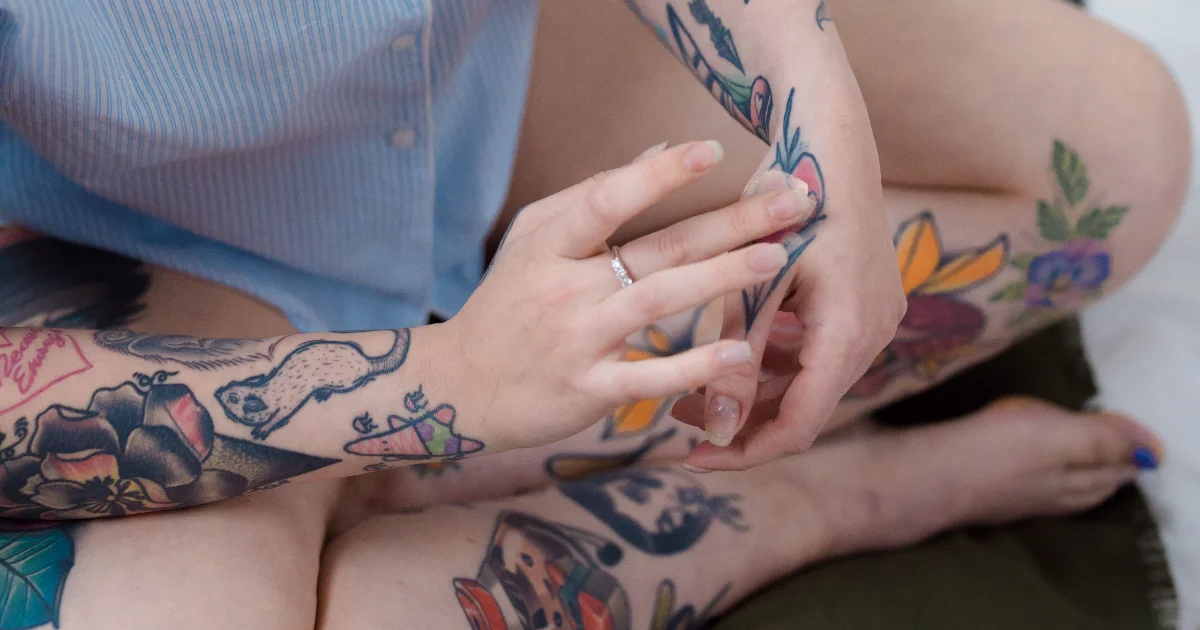
Cover-up: should you fade your old tattoo with laser first?
Should you have laser sessions before a cover-up? Find out why fading an old tattoo changes the result of your next one. Individual results vary.

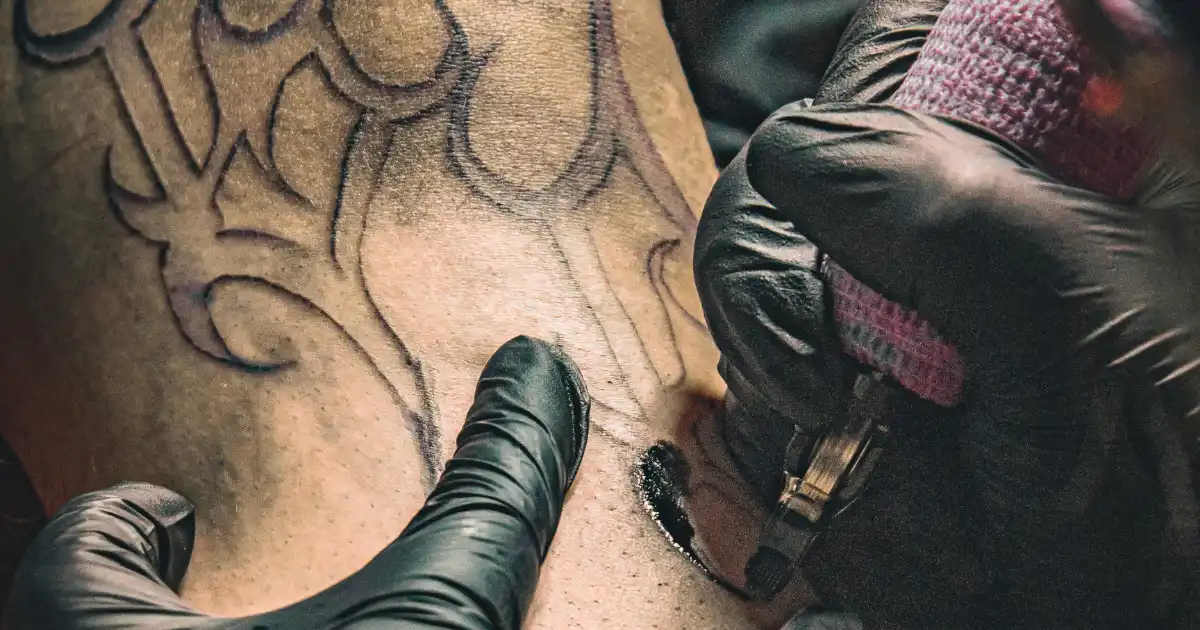
The cover-up is a popular option for people who want to transform an existing tattoo without removing it completely.
Rather than erasing, the aim is to create a new design capable of masking the old one.
Before you commit, one essential question comes up: should you have laser tattoo removal before a cover-up?
The answer is clear: in most cases yes, and it is often what makes the difference to the final result.
Understanding why is essential if you want to avoid irreversible mistakes and obtain a genuinely attractive result.
The cover-up: a technique with built-in constraints
A cover-up is not an ordinary tattoo. It is a complex technical exercise, because the tattoo artist is working on skin that is already pigmented.
The original tattoo does not disappear
Contrary to a common belief, a new tattoo does not replace the old one. The pigments remain in the skin.
The tattoo artist therefore has to work with that existing base, which imposes one major constraint:
the new design has to visually dominate the old one.
An unavoidable rule: darker and denser
To mask an existing tattoo, it is often necessary to:
- use darker colours
- increase the density of the design
- make the design larger
This strongly limits creative possibilities, particularly for fine, light or minimalist projects.
The risk: a saturated tattoo
Without preparation, a cover-up can produce:
- an overloaded result
- dark areas that are hard to read
- a heavy visual effect
This is often the stage at which regret appears a second time.
Why laser removal before a cover-up changes everything
Prior laser removal is not automatic, but it is very often recommended.
Lightening in order to rebuild
The laser is not only used to erase a tattoo. It can also be used to lighten it partially.
This process can:
- reduce the intensity of the pigments
- soften the outlines
- visually neutralise the base
The tattoo artist then works on lighter, more even skin.
Artistic freedom regained
With a lightened tattoo, the constraints drop considerably.
The tattoo artist can:
- use lighter colours
- propose finer designs
- create a more natural result
Without laser removal, the work consists of masking. With laser removal, it becomes rebuilding.
A noticeably improved final result
Laser removal allows:
- better readability of the design
- less saturation
- a more balanced result
In most cases the difference is immediately visible. Individual results vary.
The role of the PicoWay® laser by Candela
The choice of laser is decisive in a cover-up strategy.
Precision suited to lightening
The PicoWay® picosecond laser by Candela breaks pigments down finely.
That makes gradual, controlled lightening possible.
Better skin tolerance
Thanks to its ultra-short pulses:
- heat is limited
- skin risks are reduced
- the skin is preserved
This is an essential point before a new tattoo.
Not overtreating
The aim is not necessarily to erase the tattoo completely.
It is to reach an optimal level of lightening so that the cover-up can succeed.
When laser removal is essential
Very dark or saturated tattoo
Dense pigments, black in particular, are difficult to cover without prior lightening.
Poorly executed tattoo
Blurred outlines, excessive density or drawing errors need correcting before any cover-up.
Light or minimalist project
Without laser removal, it is not possible to obtain a light result on a dark base.
Old or diffuse tattoo
A tattoo that has degraded over time should be cleaned up before any new work.
Can you have a cover-up without laser removal?
Yes, but with significant limits.
Favourable cases
A direct cover-up can work if:
- the tattoo is light
- not very saturated
- small in size
The constraints are still there
Even in those situations:
- the design has to be adapted
- certain areas have to be dark
- creative options are limited
A result that is often less optimal
Without laser removal, the result is generally:
- more constrained
- less precise
- darker
The Ray studios approach before a cover-up
At Ray studios, pre-cover-up laser removal follows a structured treatment protocol delivered by trained skin therapists in a controlled environment.
The initial assessment gives a detailed reading of your tattoo
. It is used to:
- analyse the tattoo
- estimate the level of lightening needed
- define a treatment strategy
The aim is to prepare the skin as well as possible.
The RsAP® protocol
The treatment evolves at each session.
Your skin therapist adjusts:
- the intensity
- the pace
- the progression
Based on how your skin reacts and how the pigments change.
How many sessions before a cover-up?
On average:
- 1 to 3 sessions for light lightening
- 3 to 6 sessions for more advanced preparation
This depends on the density of the tattoo and on the final project.
When should the new tattoo be done?
After the last session, it is essential to wait for:
- complete healing
- the skin to stabilise
This stage determines the quality of the final result.
Conclusion
Laser removal before a cover-up is not always compulsory, but in most cases it is recommended.
It can:
- significantly improve the final result
- widen the creative possibilities
- help you avoid a tattoo that is too dark or saturated
At Ray studios, this preparation is built on:
- the PicoWay® laser by Candela
- the initial assessment
- the RsAP® protocol
An approach designed to turn an existing tattoo into a successful new design. To get started, book an initial consultation and ask about the Full Remove plan, which covers unlimited sessions at a single fixed price. Individual results vary.
FAQ
Is laser removal always necessary before a cover-up?
No, it is not mandatory in all cases, but it is strongly recommended. When a tattoo is dark, dense, or poorly done, a direct cover-up imposes many constraints and often leads to a less aesthetic result. Laser removal helps lighten the base and gives the tattoo artist more creative freedom. This significantly improves the final outcome. A consultation with a qualified professional or skin therapist helps determine whether this step is necessary.
How many laser sessions are needed before a cover-up?
The number of sessions depends on the tattoo and the desired final result. On average, 1 to 3 sessions are enough for light fading. For denser tattoos, 4 to 6 sessions may be required. The goal is not always complete removal, but rather achieving an optimal level of lightening. The treatment is adjusted based on how the tattoo responds over time.
Can you do a cover-up without waiting for healing?
No, it is essential to wait for complete healing. Skin that is still inflamed does not allow for high-quality tattooing and may lead to complications. The waiting time depends on how the skin responds, but it is generally several weeks after the last laser session. This step is crucial to ensure the best possible result.
Does tattoo removal damage the skin?
No, when performed with appropriate technology and a proper treatment approach, tattoo removal preserves the quality of the skin. It can even create a healthier base for a new tattoo. However, an improperly managed protocol may lead to unwanted side effects. This is why it is important to choose qualified professionals or skin therapists.
Is the result really better with laser beforehand?
Yes, in most cases, the result is significantly better. The tattoo artist works on a lighter and more even base, allowing for a more precise and natural outcome. Without prior removal, the final tattoo is often darker and more limited. The difference is usually very noticeable.