Can your tattoo change shape if you gain or lose weight?
Wondering whether your tattoo can change with weight gain or loss? See what our skin therapists say and how to help preserve its appearance. Individual results vary.

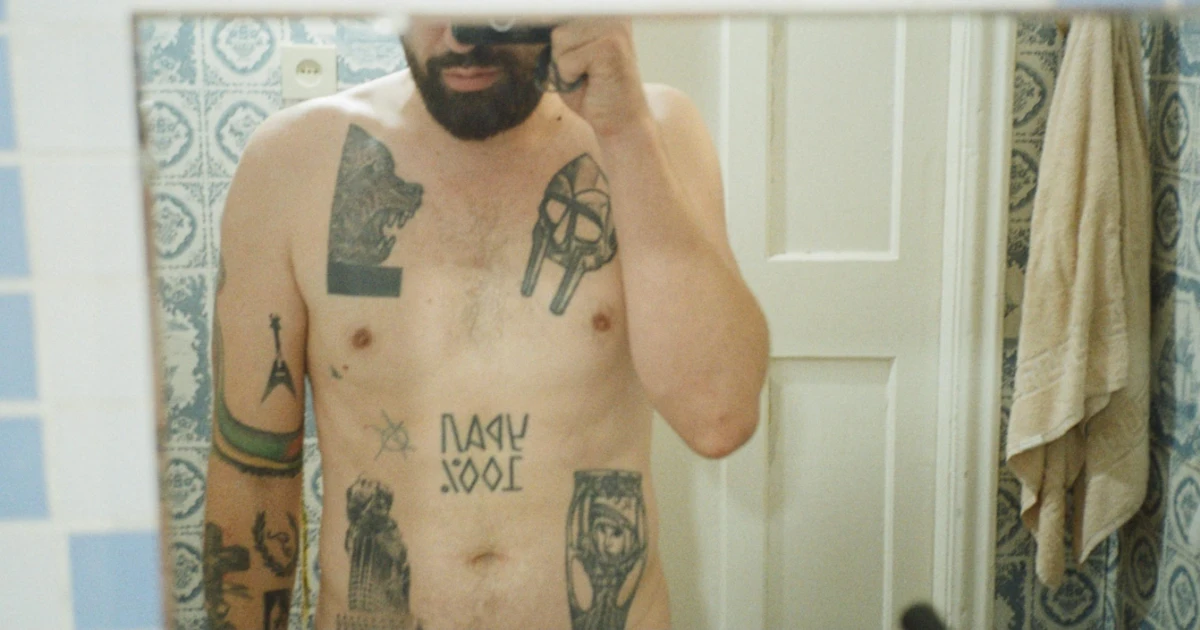
Changes in the body, whether from pregnancy, significant weight loss or a muscle transformation, rarely leave the skin untouched. And tattoos change along with it. At Ray studios, we frequently meet customers whose tattoo has lost sharpness, symmetry or consistency with how they look today, following changes to their body.
A tattoo is not fixed: it lives with you and adapts, sometimes poorly, to the way your skin changes. This article gives you a clear picture of the effects of changes in body shape on tattoos, the areas most affected, and the options available to address them with laser tattoo removal.
Tattoos and weight changes: what actually happens
The tattoo is deposited in the dermis, the middle layer of the skin, which stays relatively stable. Even so, the dermis still follows the movements of the epidermis above it when the skin is stretched or compressed. That means a tattoo, even a well executed one, is not immune to the changes in the skin that come with changes in the body.
With weight gain or loss, you may see:
- A distortion of the linework or an asymmetry in the design,
- A geometric distortion on linear or symmetrical designs,
- A gradual blurring of the outlines,
- A change in the colours, particularly on areas prone to stretch marks.
The consequences are not only visual: many people also feel a sense of disconnect or an emotional gap with their original tattoo. At Ray studios, we support these situations with a considered and human approach.
Which areas are most prone to distortion?
Higher risk areas:
The parts of the body that go through large or rapid changes in volume are the most prone to tattoo distortion. Among the most affected:
- Stomach (particularly after pregnancy or rapid weight loss),
- Hips and flanks,
- Chest, for women and men alike,
- Thighs and glutes,
- Inner arms.
These areas are particularly exposed to:
- Hormonal changes (pregnancy, menopause),
- A localised gain in mass (strength training or a sedentary period),
- The appearance of stretch marks, which can create visible breaks in the tattoo lines.
The effects can be gradual or sudden, but they are often noticeable in the medium term.
More stable areas:
Some parts of the body are structurally more stable when your weight changes:
- Forearms,
- Shoulder blades and upper back,
- Calves and ankles.
Tattoos placed on these areas generally hold up for longer, with more even ageing. That is why tattoo artists often recommend these placements for complex or highly detailed designs.
What about during pregnancy?
Pregnancy is a period of major changes to the body: the stomach expands, the chest changes in volume, and the skin is under constant tension. On the areas concerned, a tattoo may:
- Lose sharpness as the skin stretches,
- Be broken up by deep stretch marks,
- Take on a stretched, off centre or uneven appearance,
- And above all, not return to its original appearance after the birth.
At Ray studios, we take each customer's body history into account before any tattoo removal treatment. An area that has been through a recent pregnancy needs particular attention, with a care programme adapted to its sensitivity.
What if I build a lot of muscle?
A rapid or targeted muscle transformation can also affect a tattoo. Areas such as the pectorals, biceps and thighs are directly concerned. The design may:
- Look distorted as the muscle curves,
- Lose its symmetry,
- Create a swollen or compressed graphic effect,
- Be seen differently depending on posture or how contracted the muscle is.
If the gain in mass is gradual, the skin can adapt better. But where the transformation is rapid, it is not unusual for customers to come to Ray studios for an adjustment, a lightening or a partial removal.
What can I do if my tattoo has become distorted?
There are several options depending on the state of the tattoo, your goals and the characteristics of your skin. The most suitable approach depends on many factors, in particular the quality of the pigment, the age of the tattoo, and the condition of the surrounding tissue.
A reworking by a tattoo artist:
- Worth considering if the tattoo is still broadly coherent,
- Allows the artist to correct the outlines, rebalance a design or disguise slight distortions,
- Can be combined with partial laser lightening beforehand to improve the final result.
Removal or partial lightening:
- Suitable when the tattoo is too damaged, too blurred or no longer suited to your current body shape,
- Prepares a cover up project effectively, by softening areas that are too dark or too distorted,
- At Ray studios, picosecond lasers allow us to work with precision, even on sensitive areas or areas affected by stretch marks.
An initial assessment by a skin therapist is always carried out to review whether the treatment is suitable and to adapt the protocol.
Key points
A tattoo is never fixed in time. It lives with your skin, your body and your choices. A pregnancy, weight loss, a gain in muscle mass or simply the passing years can significantly change its appearance.
That does not mean you should give up on having a tattoo, only that it is worth thinking long term about the areas you choose, and staying aware of how your body changes. And if one day that tattoo no longer suits you, visually, emotionally or symbolically, there are safe options to correct, lighten or remove the design. Individual results vary.
At Ray studios, we offer you our laser expertise, the support of trained skin therapists, and an approach that respects your body and your history. Book an initial consultation to talk through your options and our Full Remove plan, with unlimited sessions at a single fixed price.
FAQ
Does a tattoo always get damaged by weight gain?
No, it depends on many factors. Gradual and moderate weight gain does not necessarily cause distortion. However, rapid, localised or significant variations, on sensitive areas, can create tension on the skin and alter the design. The location and quality of the tattoo play a key role.
Can a tattoo on the stomach be removed after a pregnancy?
Yes, provided an initial consultation is carried out beforehand. After a pregnancy, the skin on the stomach can sometimes present scarred areas or deep stretch marks that need to be identified before starting laser treatment. At Ray studios, each protocol is personalised according to the area to be treated.
Can a tattoo “crack” along stretch marks?
Yes. A stretch mark crossing a tattoo can break the continuity of the design, create a blurred line or a localised depigmentation effect. Laser treatment can help rework the area by fading the pigment or preparing a later aesthetic correction with a tattoo artist.
Is tattoo removal risky on stretched skin?
No, provided that the treatment is properly supervised. Stretched skin is not an obstacle to tattoo removal, but it requires a precise technical approach, with appropriate power and frequency settings. At Ray studios, we have experience with skin weakened or marked by time.
Can I consider tattoo removal even if my weight is still changing?
Yes, but in some cases, it’s best to wait for your body to stabilise in order to optimise results. Treatment carried out during a phase of active change (pregnancy, rapid weight loss, intense muscle building) may require additional adjustments. Individual results vary. Our team of skin therapists will guide you on the right time to start.