Yellow Tattoo Ink: Can Laser Removal Really Shift It?
Yellow pigment has a reputation for being hard to remove. Can laser really shift yellow ink in a tattoo? A clear, realistic answer. Individual results vary.

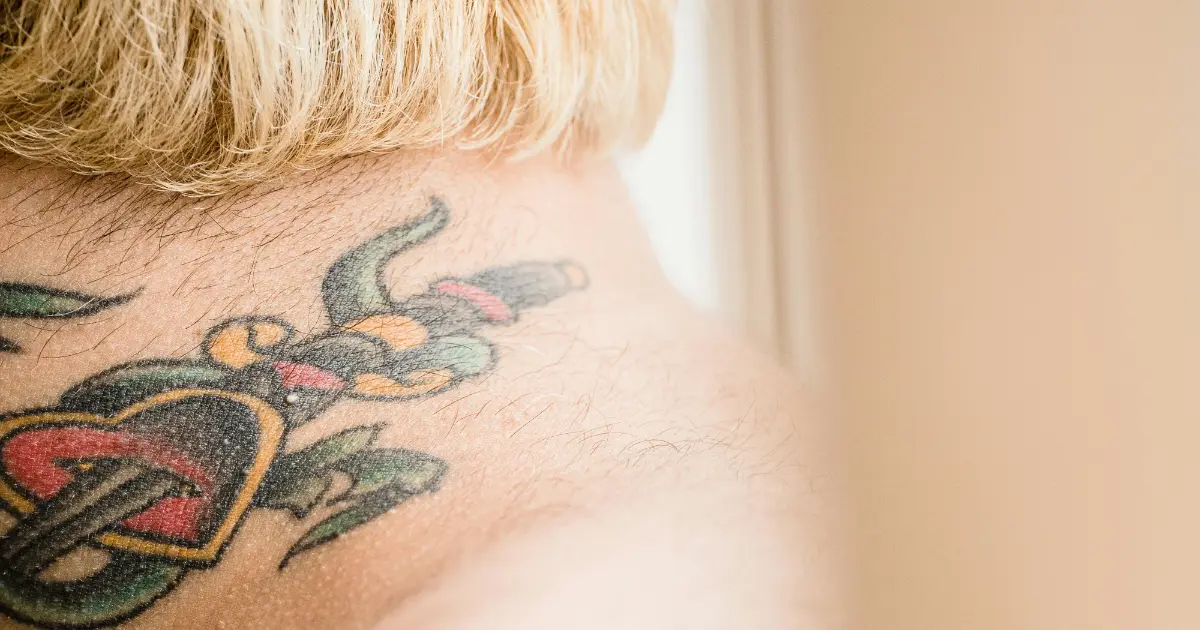
Laser tattoo removal is now the reference option for removing or fading a tattoo. While some colours such as black or dark blue generally respond very well to treatment, other pigments raise more questions. Yellow is one of them. Many customers ask this at their initial consultation: “Can yellow pigment really disappear with the laser?”
The answer is more complex than a simple yes or no. Yes, yellow can be treated. Yes, it can sometimes clear completely. But in many cases it behaves less predictably than dark pigments. Understanding what makes yellow different helps you set realistic expectations and optimise your results.
At Ray studios, a centre specialising in laser tattoo removal, pigment analysis is an essential step in building a personalised strategy for each tattoo.
Why is yellow pigment harder to remove?
How laser tattoo removal works
Removal relies on a precise physical mechanism called selective photothermolysis.
The laser emits targeted light energy:
- the pigment absorbs this energy,
- it breaks down into finer particles,
- those fragments are then gradually cleared by the immune system.
This mechanism depends heavily on one key factor: the pigment's ability to absorb light.
How yellow behaves
Unlike black, which absorbs almost every wavelength, yellow has particular optical characteristics:
- it reflects more light,
- it absorbs certain laser wavelengths less efficiently,
- it needs very precise settings to be targeted.
As a result, the laser works less efficiently, which makes treatment slower and sometimes less predictable.
Not all yellows are the same
A wide variety of pigments
Contrary to what you might assume, yellow is not a single colour.
In tattooing there is a wide range of compositions:
- pure yellow,
- yellow mixed with white (often more opaque),
- yellow mixed with green,
- synthetic organic pigments,
- inks containing metal oxides.
Why that changes everything
The chemical composition directly influences:
- how well the laser is absorbed,
- the speed of fragmentation,
- the number of sessions needed,
- the final result.
Two tattoos that look similar can respond in completely different ways.
That is why expert analysis is essential before treatment begins.
The decisive role of laser technology
How lasers have evolved
The first generations of lasers (Q-switched) could already treat tattoos, but with significant limits on certain colours.
Today, picosecond lasers represent a major step forward.
The PicoWay® picosecond laser at Ray studios
Treatment is carried out with the PicoWay® by Candela, a latest-generation picosecond laser.
Its advantages:
- ultra-short pulses (picoseconds),
- finer fragmentation of particles,
- better efficiency on some coloured inks,
- reduced thermal stress on the skin.
Impact on yellow pigment
Even with advanced technology:
- yellow remains slower to treat,
- but results are generally better than with older technologies.
The laser improves performance, but it does not change the nature of the pigment.
How many sessions to remove a yellow tattoo?
The determining factors
The number of sessions depends on several parameters:
- pigment density,
- depth of injection,
- chemical composition,
- age of the tattoo,
- the customer's phototype,
- location on the body,
- how well the immune system clears the pigment.
The assessment: a personalised approach
At Ray studios, an assessment is drawn up at the initial consultation.
It is a precise diagnosis of your tattoo, based on:
- visual analysis,
- the experience of our skin therapists,
- data gathered from similar cases.
What makes yellow different
For yellow pigments, the assessment often anticipates:
- a higher number of sessions,
- slower progress,
- a more variable response.
Treatment therefore calls for patience and consistency.
Can yellow disappear completely?
The favourable cases
In some situations, yellow can be fully cleared:
- low pigment density,
- ink that responds to the laser,
- an older tattoo,
- a good immune response.
The more complex cases
In others, you see:
- substantial fading,
- loss of saturation,
- significant lightening,
- but a slight residue that persists.
That is not a failure, but a limit linked to the composition of the pigment. Individual results vary.
How yellow changes during treatment
Common visual changes
Over the course of the sessions, yellow pigment may:
- become duller,
- lose intensity,
- look more matt,
- shift slightly in shade.
Why do these changes happen?
These variations are due to:
- gradual fragmentation,
- a change in how light is reflected,
- partial clearance of the pigment.
Personalised follow-up with the RsAP® protocol
At Ray studios, the RsAP® (Ray studios Advanced Performance) treatment protocol makes it possible:
- to adjust the settings at each session,
- to adapt the intensity gradually,
- to optimise results while protecting the skin.
The role of phototype in removing yellow
An indirect influence
Phototype (skin colour) influences:
- the choice of laser settings,
- the pace of the sessions,
- the precautions to take.
Fair skin versus darker skin
- Fair skin: treatment is often quicker.
- Olive to darker skin: a more gradual approach.
That said, the difficulty with yellow is mainly linked to the nature of the pigment, not to the skin.
Fading or full removal: a strategic choice
Two possible approaches
Treatment can aim for:
1. Full removal
Objective: maximum clearance of the tattoo.
2. Lightening
Objective: making the tattoo less visible.
When is fading the better goal?
- preparing for a cover-up,
- correcting a design,
- toning down a colour that is too vivid.
In these cases, yellow is often easier to fade than to remove entirely.
Why the centre's expertise matters
A high level of technical skill
Treating yellow requires:
- precise knowledge of wavelengths,
- a careful reading of the skin's reaction,
- constant adaptation of the settings.
The risks of poor handling
An unsuitable approach can lead to:
- ineffective treatment,
- wasted sessions,
- pigment-related risks,
- damage to the skin.
Trained skin therapists, correct laser settings and a controlled environment make the difference.
Time: the key to success
A gradual process
Removing yellow requires:
- several spaced-out sessions,
- respect for healing times,
- ongoing assessment.
Why not rush?
Speeding up treatment can:
- increase the risks,
- fail to improve results,
- put the skin under unnecessary strain.
Controlled progress is the best strategy.
Tips to optimise your results
Before treatment
- avoid sun exposure,
- moisturise the skin,
- tell us about any treatments you are taking.
During treatment
- keep to the intervals between sessions,
- follow your skin therapist's advice,
- avoid trauma to the skin.
After each session
- protect the area from the sun (high SPF),
- avoid irritation,
- support healing.
Key points
Yellow pigment in a tattoo can be treated with the laser, but it has its own characteristics:
- it is harder to target than black,
- it often needs more sessions,
- it progresses less predictably,
- the result depends heavily on its composition.
With picosecond technology, a personalised assessment and the RsAP® protocol, significant fading is possible, and in some cases removal. Individual results vary. The key remains a realistic, gradual and expert approach. At Ray studios, the Full Remove plan gives you unlimited sessions at a single fixed price, which suits pigments that take longer to respond.