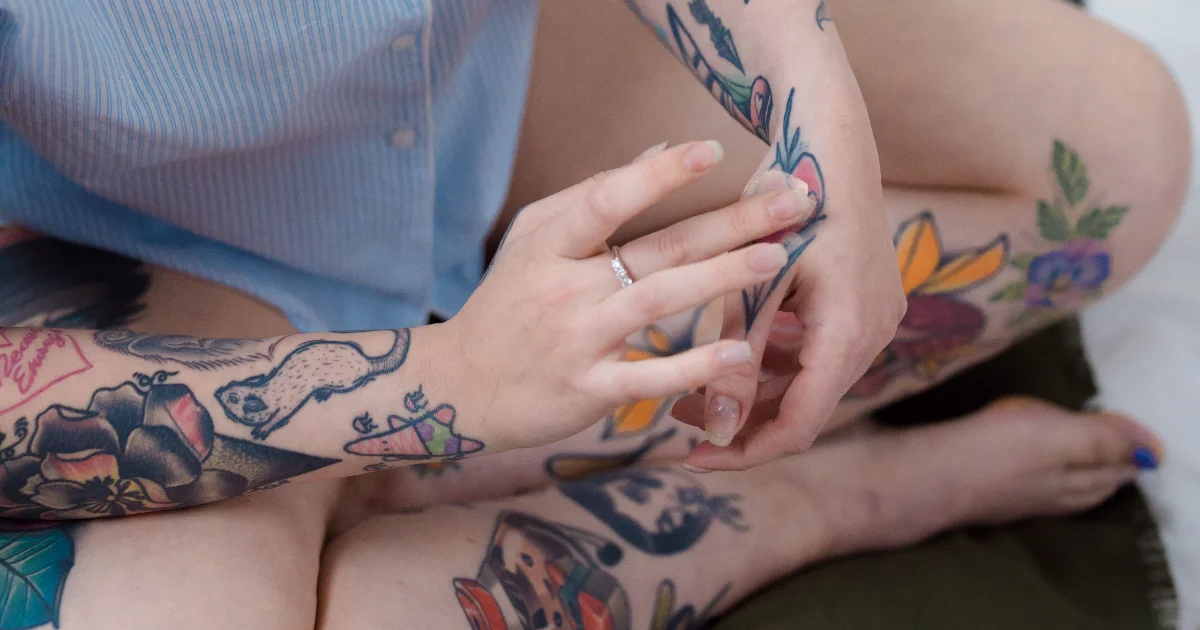
Can Laser Remove Tattoos With Complex Shading and Gradients?
Yes, tattoos with complex shading and gradients can be removed with laser, but the work takes more precision and often more sessions. Individual results vary.

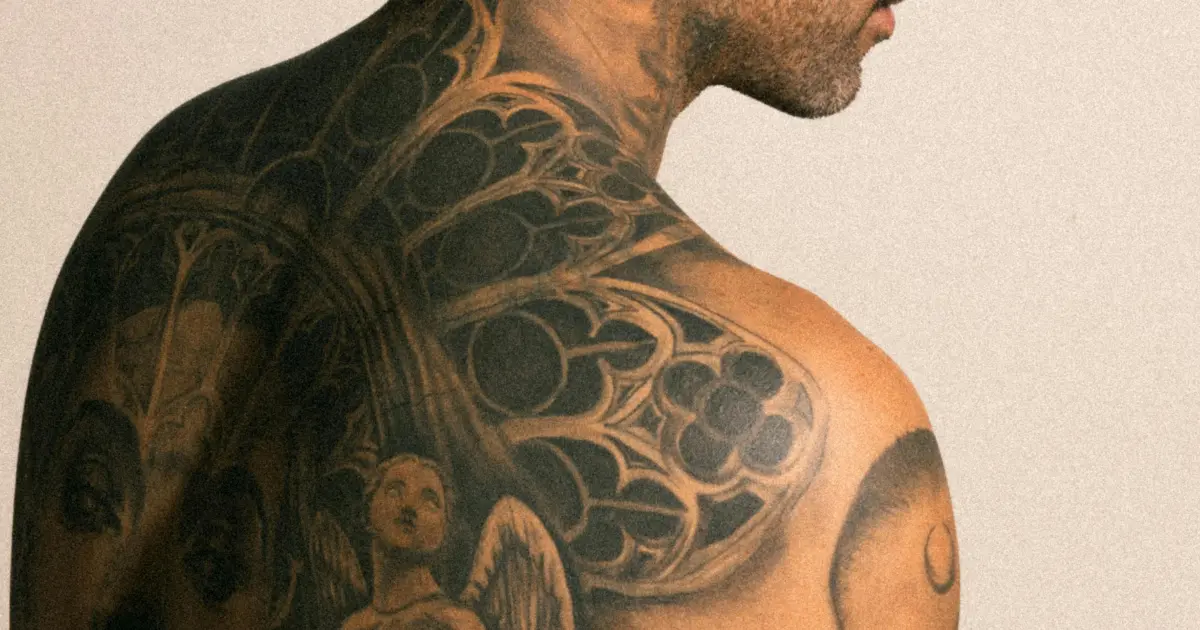
Some tattoos are not made of simple lines or solid blocks: they use shading, depth and texture effects, sometimes very realistic. Portraits, mandalas, detailed scenes, black and grey work… These tattoos often have a strong look, but they raise a key question when the time comes to remove them:
“Can laser remove a tattoo with shading or complex gradients?”
At Ray studios, we work on this type of tattoo regularly. Here is what you should know before you start.
Yes, laser can remove shaded tattoos
Laser tattoo removal is based on a simple principle: breaking up the ink pigments in the skin, layer by layer, so that they are cleared naturally by the body.
This applies just as well to:
- Thick lines,
- Blurred areas,
- Soft transitions,
- Or highly detailed designs.
The laser does not “read” the image: it responds to the concentration of pigment, whatever its shape or intensity.
What makes shading more technical to remove
Even though they can be removed, shaded tattoos present particular challenges:
1. Variation in ink density
Shading is not uniform: some areas are more saturated than others.
Some parts will fade more quickly, others will need more sessions.
2. Layering
Some shading effects are built up by passing the needle over the same area several times.
This creates different levels of depth, and therefore an uneven spread of ink in the dermis.
As a result, the laser has to work gradually and in a targeted way, without stressing the surface layers.
3. Residual “haze” effect
On very light gradients, a faint trace can remain at the end of the treatment.
It is not a line or a shape, more a residual shadow. It may fade with one or two extra sessions, or be worked into a new tattoo project. Individual results vary.
Which laser is used for this type of tattoo?
At Ray studios, we use the latest generation of picosecond lasers, suited to this level of detail.
Why?
- Because they break up pigments more finely,
- Because they produce less heat, so less risk of depigmentation,
- And above all, because they allow more precise work on delicate areas.
This type of laser is ideal for realistic tattoos, black and grey work and texture effects.
Does it take longer than a standard tattoo?
Not necessarily. It depends on:
- The overall pigment saturation,
- How your skin responds to the treatment,
- The type of ink used.
On average, a shaded tattoo needs as many sessions as a standard design of the same size, but each session calls for more precision.
Can a shaded tattoo be covered up after lightening?
Yes. It is one of the most common requests.
In that case, partial removal is often recommended:
- To lighten certain areas,
- To make the background more neutral,
- And to help the new design read more clearly and last longer.
We work regularly with tattoo artists to adapt the laser protocol to their future design.
Key points
Yes, a tattoo with shading and complex gradients can be removed with laser.
But it calls for:
- A precise assessment,
- A gradual treatment,
- And sometimes a little more time than simpler designs.
At Ray studios, our skin therapists know the protocols suited to realistic, detailed or textured tattoos. We take the time to assess each project, each skin type and each ink, working towards a removal that is clean, gradual and controlled. Individual results vary. You can discuss your tattoo with a skin therapist at your initial consultation, where we explain the Full Remove plan: unlimited sessions at a single fixed price.